





Acoustic Soundproofing Foam - Made in the UK by eFoam
UK's largest acoustic foam sheets and soundproof foam panels supplier
Improve the sound quality of your room with acoustic foam sheets and panels made here in the UK by eFoam. Our acoustic foam is designed to absorb sound, reduce echo and control reverberation, making speech, music and recordings clearer in studios, offices, podcast rooms, home cinemas, music rooms and other sound sensitive spaces.
Choose from flat acoustic foam sheets, convoluted acoustic foam, bass traps, self-adhesive panels, Pyrosorb-S Class 0 foam and acoustic foam cut to size. Acoustic foam is used for acoustic treatment and sound absorption inside a room; it helps control reflected sound but does not completely block noise passing through walls, floors, ceilings, doors or windows.
As the UK's largest acoustic foam manufacturer, everything we supply is made to exacting British standards. Our acoustic foam is compliant with UL94 HF1 Classification and the requirements of Schedule 1, Part 1 of The Furniture and Furnishings (Fire) (Safety) Amended Regulations 1989, giving you confidence that it is manufactured for both performance and safety.
Please choose from the following:
Tiles & Self
|
Bass traps |
Professional
|
Acoustic foam
|
Technical Info |
Acoustic Data |
- Acoustic Foam Sheet Calculator
- What Is Acoustic Foam Used For?
- Acoustic Foam Sheets, Panels and Wall Tiles
- Does Acoustic Foam Soundproof a Room?
- Which Acoustic Foam Should I Choose?
- How Much Acoustic Foam Do I Need?
- Where Should Acoustic Foam Be Placed?
- Technical Specifications & Acoustic Data
- Why Choose eFoam
- Frequently Asked Questions
Acoustic Foam Sheet Calculator
Enter the dimensions of the surface you want to treat, choose your coverage level and the acoustic foam sheet type. We’ll calculate how many sheets you need and the live total cost including delivery — then send them straight to your basket.
Coverage guide — 25–30%: offices, podcasting, Zoom calls • 35–40%: home studios, recording & mixing rooms • 100%: full wall coverage. All prices include VAT & delivery.
Your Requirement
| Total surface area | |
| Coverage area needed | |
| Per sheet | |
| Sheets required | |
| Total inc. VAT & delivery |
What Is Acoustic Foam Used For?
Acoustic foam is used wherever reflected sound makes a room noisy, unclear or difficult to work in. Common uses include recording studios, podcast rooms, music practice rooms, home cinemas, gaming rooms, offices, call centres, classrooms, meeting rooms and commercial interiors.
It is usually fitted to walls, ceilings, doors, panels or other hard reflective surfaces. The foam absorbs sound energy that would otherwise bounce around the room, helping to reduce echo, flutter echo and unwanted reverberation.
Acoustic Foam Sheets, Panels and Wall Tiles
Acoustic foam sheets are larger pieces of sound absorbing foam used to cover wider areas, while acoustic foam panels and wall tiles are usually fitted in smaller sections to treat specific reflection points on walls and ceilings. Acoustic bass traps are designed for room corners, where lower-frequency sound can build up and cause a boomy or uneven sound.
eFoam supplies acoustic foam sheets, acoustic foam panels, acoustic wall tiles and bass traps in a choice of flat, convoluted, self-adhesive and Class 0 options. They can be used in studios, offices, home cinemas, podcast rooms, music rooms and other spaces where clearer sound, reduced echo and better room acoustics are required.
Does Acoustic Foam Soundproof a Room?
Acoustic foam can make a room sound better, but it does not completely soundproof a room on its own. It is designed to absorb reflected sound inside a space, reducing echo and reverberation, rather than fully blocking sound from travelling through walls, floors, ceilings, doors or windows.
If your aim is to stop noise entering or leaving a room, you may need additional soundproofing materials, sealing work or construction changes. Acoustic foam is best used as part of acoustic treatment, where the goal is clearer sound within the room.
Which Acoustic Foam Should I Choose?
The best acoustic foam depends on the room and the sound problem you want to reduce. Flat acoustic foam sheets are a good general choice for covering larger areas neatly. Convoluted acoustic foam has an egg-crate surface that increases surface area and helps break up reflections. Bass traps are used in corners, where lower-frequency sound can build up.
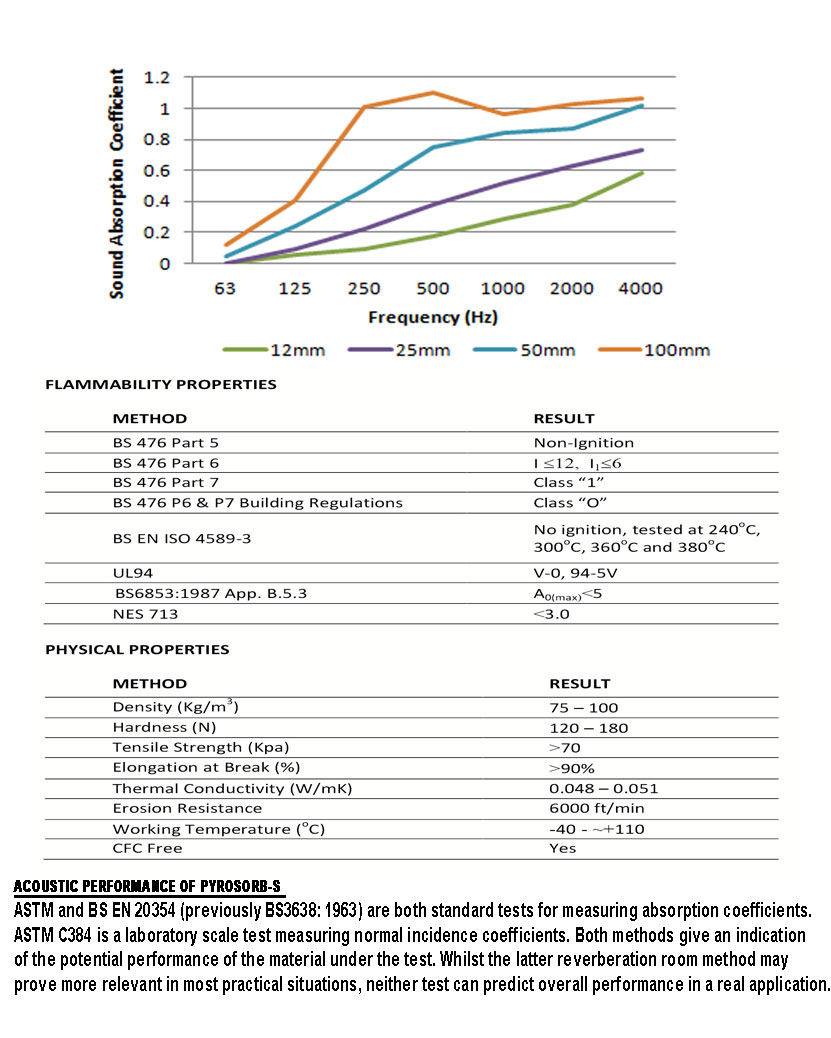
For offices, studios, podcast rooms and home cinemas, acoustic foam panels or tiles can be fitted to walls and ceilings to reduce echo and improve clarity. For premium studio applications, Sonic Acoustics deliver professional-grade treatment. For commercial or specification-led projects, Pyrosorb-S Class 0 acoustic foam may be more suitable where enhanced fire performance is required.
How Much Acoustic Foam Do I Need?
You do not usually need to cover every wall with acoustic foam. In many rooms, treating the main reflection points is more effective than covering the whole space. Start with the walls facing speakers or sound sources, the side walls at ear height and, where possible, the ceiling above the listening or recording position.
For light echo control in offices or call centres, a smaller amount of wall coverage may be enough. For studios, music rooms and recording spaces, more coverage and corner bass traps may be needed. If the room has lots of hard surfaces, glass or bare walls, it will usually need more acoustic treatment. For bespoke dimensions, our acoustic foam cut to size service handles any custom size.
👉 Use our Acoustic Foam Sheet Calculator at the top of the page to work out exactly how many sheets you need.
Where Should Acoustic Foam Be Placed?
Acoustic foam should be placed where sound is most likely to reflect. The most common areas are side walls, rear walls, ceilings above the listening position and corners of the room. Treating these points helps reduce echo, flutter echo and reflections that make speech or recordings sound unclear.
For recording and mixing, place foam around the main listening or microphone position first. For offices, meeting rooms and home cinemas, focus on the largest hard wall areas and any surfaces directly opposite speakers or voices.
Written by David Vanderdoes, Technical Sales Manager at eFoam. Cutting bespoke acoustic and upholstery foam from our ISO 9001 certified Bilston factory since 1983.
Last updated: June 2026
Acoustic Foam Technical Specifications
All standard acoustic foam sheets and panels supplied by eFoam are manufactured from combustion modified conventional polyether polyurethane foam and tested to relevant British Standards. The technical details below apply to our standard flat and convoluted acoustic foam products.
Physical Properties
Physical properties are measured using test methods described in the BS4443 series and BS EN ISO 845.
| Property | Specification |
| Nominal piece density range | 23.5 - 25.5 kg/m³ |
| Nominal hardness range | 110 - 150 N |
| Nominal tensile strength | 70 kPa min. |
| Nominal elongation at break | 120% min. |
| Foam type (BS3379) | CMB - Combustion Modified Conventional Slabstock |
| Nominal classification (BS3379) | A |
Flammability & Fire Safety
- Complies with the requirements of Schedule 1, Part 1, The Furniture and Furnishings (Fire) (Safety) Amended Regulations 1989.
- Under Writers Laboratories — UL94 HF1 Classification.
- Automotive: FMVSS 302 (Self extinguishing).
Standard colour is Dark Grey. If you require a specific colour, please contact us to discuss your requirements. Specification last reviewed March 2026. Simply Foam Products Ltd reserves the right to update product data without prior notice.
Acoustic Absorption Data
The chart below shows how our standard acoustic foam absorbs sound across different frequencies. Acoustic performance is affected by foam thickness, profile, placement and the surfaces in the room. Thicker acoustic foam generally improves absorption, especially across high / mid frequency ranges (the basis for calculating NRC, Noise Reduction Coefficient). For low-frequency control, we recommend using bass traps in room corners alongside wall or ceiling panels.
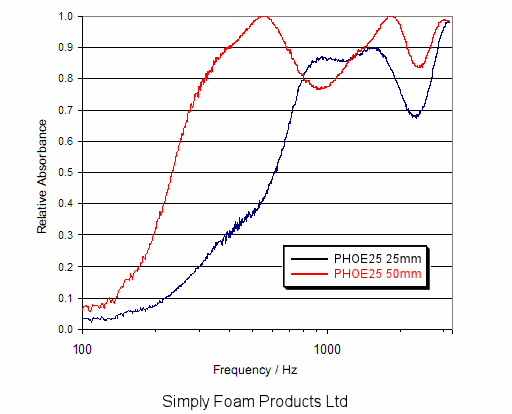
If you need detailed acoustic performance data for a specific project or specification document, please contact our team and we will provide the full data sheet.
Why choose eFoam for your acoustic foam?
eFoam has supplied foam products throughout the UK since 1983, with acoustic foam manufactured and supplied directly from our own ISO 9001 certified UK factory in Bilston. We offer acoustic foam sheets, panels, tiles, bass traps, Class 0 foam and cut to size options for domestic, commercial and professional use.
All prices include VAT and fast free UK mainland delivery, with next working day dispatch on a 24-hour courier service. Get in touch with our team to help you choose the right acoustic foam for studios, offices, home cinemas, music rooms, podcast rooms, plant rooms and other spaces where sound absorption or acoustic treatment is required.
Why customers trust eFoam:
- ISO 9001 certified UK factory in Bilston, West Midlands
- Manufacturing foam in the UK since 1983
- 32,664 verified customer reviews (4.87/5 stars)
- BS3379 compliant, with Class 0 fire-rated options available
- Free UK mainland delivery with next working day dispatch on a 24-hour courier service
- Tested to UL94 HF1 Classification and BS EN ISO 845
Acoustic Foam Frequently Asked Questions
What Is Acoustic Foam?
Acoustic foam is a lightweight, open-cell foam used for sound absorption and acoustic treatment. It is designed to help reduce echo, reverberation and background noise within a room, improving sound clarity and acoustics within an enclosed space.
Does acoustic foam block sound?
Acoustic foam does not fully block sound on its own. It mainly absorbs reflected sound inside a room, helping to reduce echo and improve clarity. Blocking sound from entering or leaving a room usually requires additional soundproofing materials, sealing and construction methods.
Are acoustic foam panels good for walls?
Yes, acoustic foam panels are commonly fitted to walls to reduce sound reflections. They are useful on hard, flat surfaces where sound would otherwise bounce around the room. Wall panels are often used in studios, offices, home cinemas and podcast rooms.
What is the difference between flat and convoluted acoustic foam?
Flat acoustic foam has a smooth surface and gives a neat, tidy finish. Convoluted acoustic foam has an egg-crate profile, which increases surface area and helps break up sound reflections. Both options can reduce echo and reverberation.
Do I need bass traps?
Bass traps are useful if you need better low-frequency control. Standard acoustic foam panels help with mid and high-frequency reflections, while bass traps are designed for room corners where lower-frequency sound can build up.
Can acoustic foam be cut to size?
Yes, eFoam can supply acoustic foam cut to size for many applications. Cut to size acoustic foam is useful where standard sheets, tiles or panels do not fit the space or where a more specific shape is required.
How do I fix acoustic foam to a wall?
Acoustic foam can usually be fixed using a suitable spray adhesive or self-adhesive backing, depending on the product and surface. The surface should be clean, dry and free from dust before fitting. Always check suitability before applying adhesive to decorated walls.
Is Class 0 acoustic foam fire rated?
Pyrosorb-S Class 0 acoustic foam is designed for applications where enhanced fire performance is required. It is commonly used in commercial, public, industrial and specification led acoustic projects where standard acoustic foam may not be suitable.