





AI in Foam Manufacturing: A Game Changer
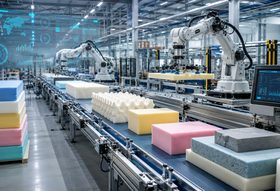
Artificial intelligence is becoming part of everyday manufacturing, and the foam industry is no exception. It doesn't replace material knowledge, skilled operators or careful quality control. Instead, it can help manufacturers make better use of data, spot problems earlier and run equipment more consistently.
For a material that can vary by density, firmness, cell structure and intended application, that extra level of control can make a meaningful difference.
How is AI used in foam manufacturing?
AI systems work by analysing large amounts of information and identifying patterns that would be difficult to monitor manually. In foam production, that information may come from temperature sensors, pressure readings, production speeds, cameras, cutting machines and quality records.
The most useful systems are usually connected to a clear manufacturing problem. They might help reduce dimensional variation, improve sheet yield, or warn that a machine is beginning to behave differently from normal.
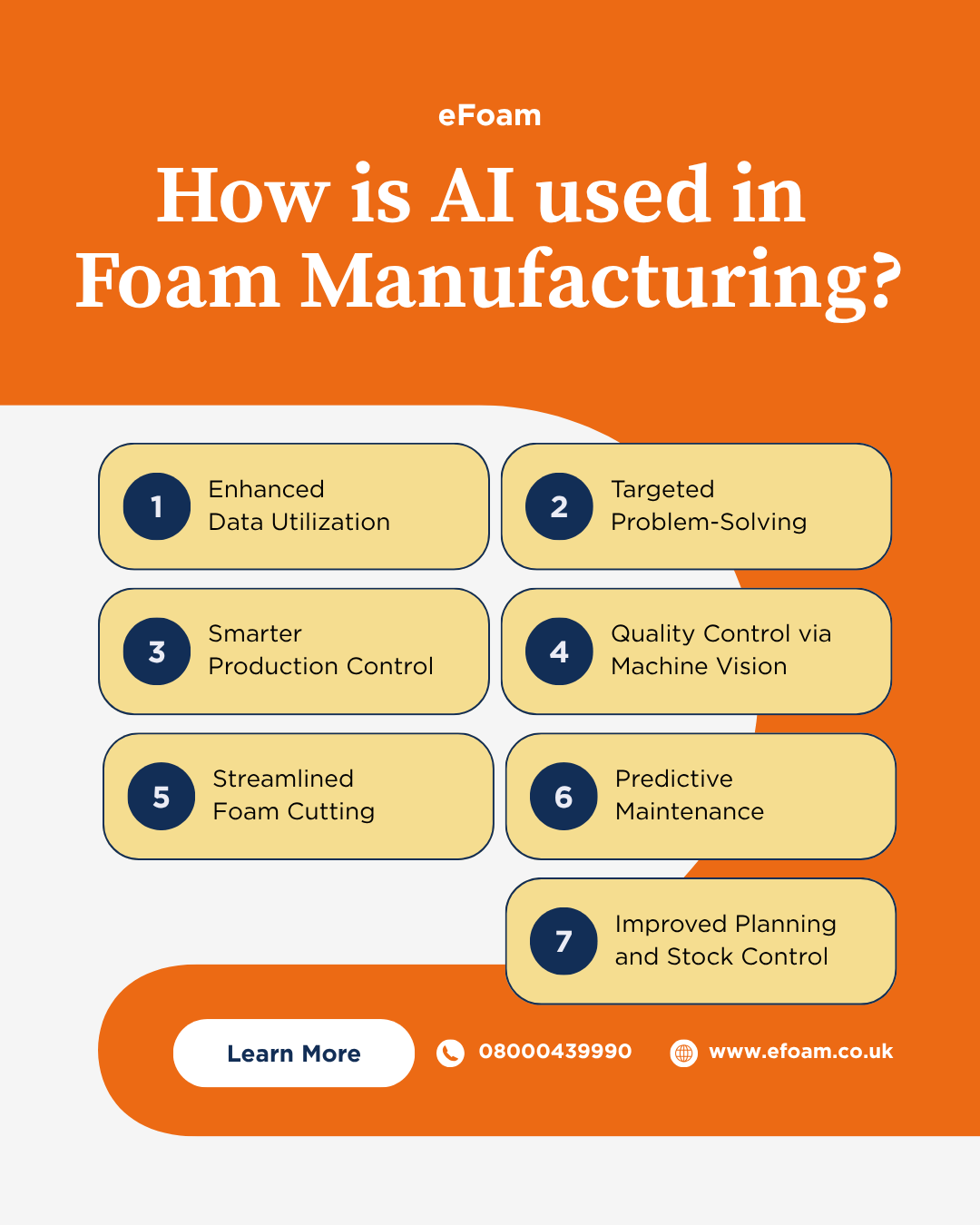
Smarter production control
Foam production depends on keeping multiple variables within a controlled range. Small changes in temperature, mixing, curing or line speed can affect the finished material. AI-assisted monitoring can compare live readings with previous successful batches and flag unusual conditions before a full run is affected.
This doesn't mean allowing software to make every decision. Experienced production teams still need to understand the chemistry, machinery and end-use specification. AI is most effective when it gives those teams better information at the right time.
Quality control with machine vision
Camera-based inspection can identify surface defects, inconsistent colour, damaged edges or dimensional errors as material moves through production. A trained vision system can check more frequently than occasional manual sampling and create a record of what it has found.
For cut foam components, vision systems may also confirm that the correct shape has been produced and that cut-outs are in the right position. Human checks remain important, particularly for feel, recovery and application-specific performance.
More efficient foam cutting
Digital nesting software already helps arrange parts on a sheet or block to reduce waste. AI can extend this by learning from previous cutting jobs, production constraints and order patterns. It may recommend a cutting sequence that uses material more efficiently or groups compatible orders together.
For customers, the benefit isn't simply faster cutting. Better yield can reduce avoidable offcuts and make bespoke production more cost-effective. eFoam's foam cut-to-size service uses customer dimensions to produce made-to-measure pieces in a wide choice of shapes.
Predictive maintenance
Traditional maintenance is either reactive, after a fault occurs, or scheduled at fixed intervals. Predictive maintenance uses vibration, temperature, current draw and operating history to estimate when a component may need attention.
On cutting, laminating or converting equipment, an early warning can reduce unplanned downtime and help prevent poor-quality output caused by a worn blade, misalignment or inconsistent feed.
Planning and stock control
AI can also support demand forecasting. By analysing seasonal orders, lead times and material use, it may help a manufacturer maintain sensible stock levels without over-ordering. This is especially valuable where customers need a broad range of foam grades, densities and thicknesses.
Forecasting is never perfect, so it should support rather than replace purchasing judgement. Sudden market changes, one-off contracts and supply disruption still require human decisions.
What are the limitations?
AI is only as useful as the data behind it. Inaccurate sensors, inconsistent records or poorly defined targets can produce misleading recommendations. Manufacturers also need suitable cybersecurity, access controls and clear responsibility for decisions.
There's a risk of automating a bad process rather than improving it. Before introducing AI, the production method should be understood, documented and measured properly. You can read more about this in our guide to responsible foam production and risk management.
What comes next?
The most realistic future is a combination of skilled people, reliable machinery and better digital support. AI may make foam production more consistent, reduce waste and give operators earlier warning of issues, but practical experience will remain essential. For wider context, see our overview of key global foam industry statistics.
For customers, the result should be straightforward: more repeatable products, efficient bespoke cutting and better information when selecting the right foam for a job.
Frequently asked questions
Does AI replace skilled workers in foam production?
No. AI doesn't replace material knowledge, skilled operators or careful quality control. It analyses data and flags problems earlier, but experienced teams still need to understand the chemistry, machinery and end-use specification. AI is most effective when it gives those teams better information at the right time.
How does AI reduce foam cutting waste?
Digital nesting software arranges parts on a sheet or block to reduce waste. AI extends this by learning from previous cutting jobs, production constraints and order patterns, recommending sequences that use material more efficiently or grouping compatible orders. Better yield means fewer avoidable offcuts and more cost-effective bespoke production.
What data does AI need to be useful in manufacturing?
AI is only as good as the data behind it. It draws on temperature and pressure sensors, production speeds, cameras, cutting machines and quality records. Inaccurate sensors, inconsistent records or poorly defined targets can produce misleading recommendations, so the process should be understood, documented and measured properly first.
Is AI only for large foam manufacturers?
Not necessarily. The most useful systems are tied to a clear, specific problem – reducing dimensional variation, improving sheet yield, or warning that a machine is drifting from normal. A focused application can benefit a smaller operation without needing to automate the entire plant at once.