





DIY Foam Stair Runner
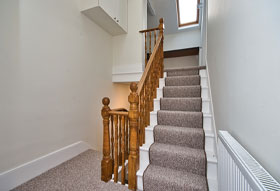
As more of us grow confident with DIY, the IKEA "hackers" community keeps presenting new ideas to follow. A more substantial project is the IKEA-hack stair runner, which uses several KLEJS doormats, polyurethane foam sheets, and a few simple tools to transform a staircase.
What you'll need
Stair runners are an excellent middle ground between a carpeted and an exposed-wood staircase. They're practical, offering the warmth, comfort and stability of carpet, while being on trend and showing off the craftsmanship of your wooden stairs. With typical runners costing from a few hundred to over a thousand pounds, this hack is a high-quality, cost-efficient alternative. The KLEJS doormat (or any similar hard-wearing material you prefer) gives plenty of scope to customise – there's no need to stick with traditional carpet. You'll need to measure your staircase, including the flush kickstand panel and flat base of each step, and compare the total against the KLEJS mat width to calculate how many mats you need, plus polyurethane foam underlay cut to the same width as the mat.
Preparing the staircase
For comfort and a quality finish, order thin polyurethane foam sheets for each step, used on the base of each step only, not the kickstand sides, measured and ordered via our cut to size tool. If your staircase is carpeted, strip it off and carefully remove any carpet grippers. Many stairs are solid wood, but others are MDF and will need preparing and painting with a wipeable, durable paint before the runner goes on.
Installing the runner
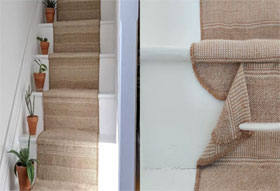
Take your foam underlay – a continuous roll in your width or individual sheets per step – and attach it with strong adhesive, or staples for extra reinforcement. The KLEJS mats give the illusion of a full runner, but the luxurious carpet feel comes from the foam underlay. Once secure and dry, fit the mats:
- Start from the bottom of the staircase, fixing each mat with staples.
- Staple the edge from each kickstand's bottom first, leaving a one-inch overlap.
- Work your way up, keeping the mat as close as possible to the kickstand and stapling under the lip of each step for the most professional finish.
For more IKEA-hack ideas, see our guides to making a foam bench and a Lack storage table. For personal guidance on your DIY projects, please contact one of our friendly advisers.
Frequently asked questions
What is an IKEA stair runner hack?
It uses several KLEJS doormats over polyurethane foam underlay to create a stair runner at a fraction of the usual cost – typical runners can cost anywhere from a few hundred to over a thousand pounds to design and install.
Do you need foam underlay for a stair runner?
Yes, for a luxurious carpet feel. The mats alone give the illusion of a full runner, but the warmth, comfort and stability underfoot come from a foam underlay fitted to the base of each step.
How do you fit a foam stair runner?
Measure your steps, cut foam to the base width of each, strip any old carpet and grippers, fix the underlay with adhesive or staples, then staple the mats from the bottom up, leaving a one-inch overlap and stapling under each step lip.