





Foam for Headphones, Earbuds and Headset Covers
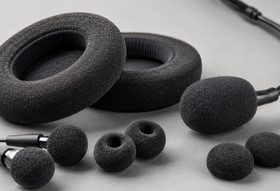
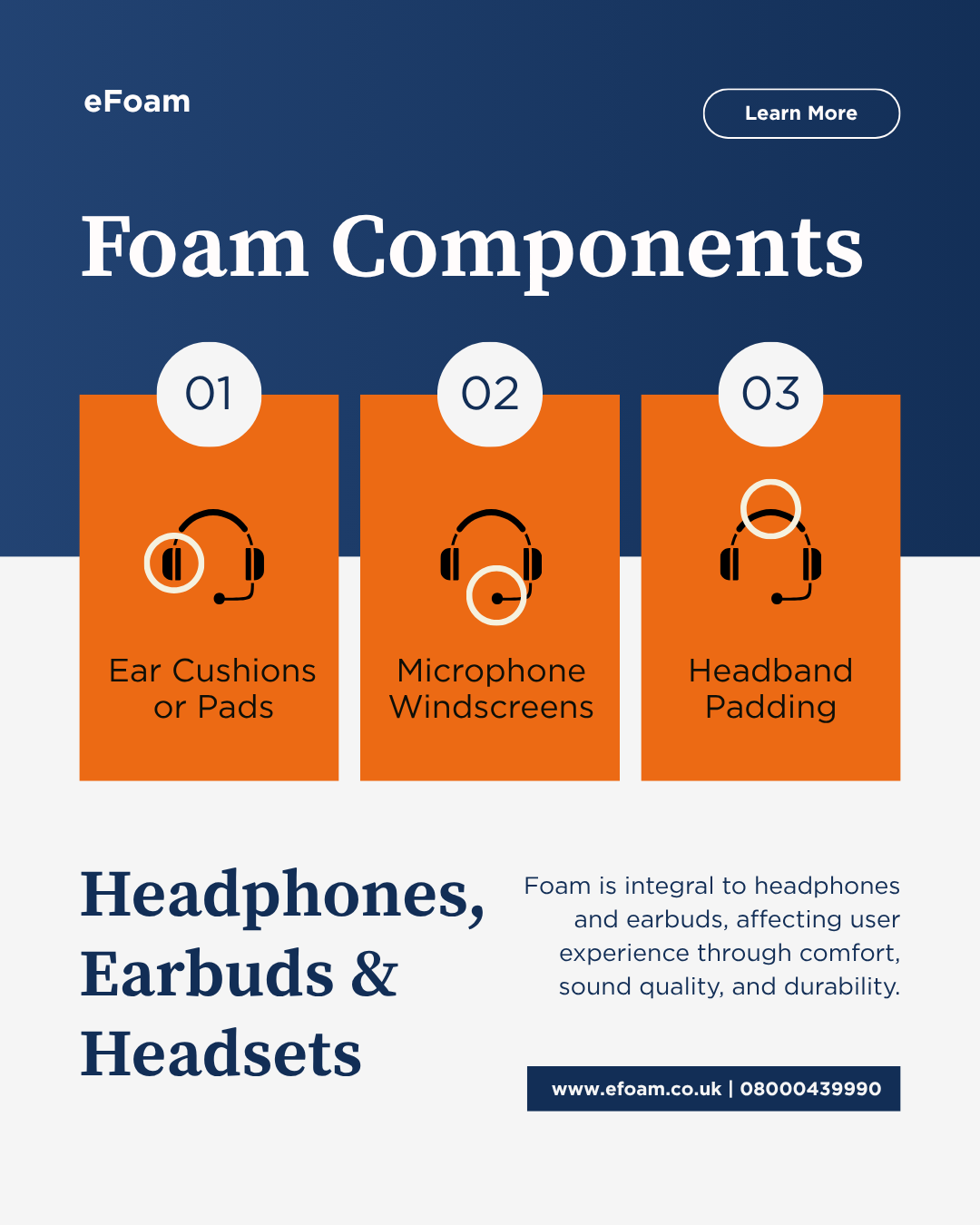
Foam appears throughout headphones and headsets, from the soft ear cushions around over-ear models to the small windscreens covering a microphone. Each component has a different job, so replacing it with any foam of a similar colour may change comfort, fit or sound.
Where possible, use a part designed for the exact model. Bespoke foam is most useful for specialist equipment, prototypes and discontinued components.
Ear-pad foam
Over-ear and on-ear pads normally contain a soft resilient polyurethane foam beneath leather, synthetic leather or fabric. The foam spreads pressure around the ear and helps the pad maintain contact with the head.
A pad that's too firm can create uncomfortable pressure, while one that's too soft may collapse and allow the ear or driver housing to touch the head.
How ear pads affect sound
The thickness, shape and seal of the pad influence the distance between the ear and driver. A change can alter bass response, stereo imaging and external noise isolation.
This is why universal replacement pads don't always sound like the original. Even when they fit the mounting ring, a different foam density or cover porosity may change performance.
Earbud foam tips
Foam earbud tips compress before insertion and slowly expand to fit the ear canal. They can provide a secure seal and reduce external sound, but size is important.
Don't force an oversized tip or insert it too deeply. Replace tips that become damaged, dirty or no longer recover, and follow the earbud manufacturer's cleaning guidance.
Microphone windscreens
The small foam cover on a headset microphone reduces breath noise and protects the capsule from dust and light moisture. It's normally made from open-cell polyurethane with controlled porosity.
A very dense substitute can make speech sound muffled, while an oversized cover may fall off or rub against the user's face. Our guide to acoustic foam for podcasting and vlogging covers microphone treatment in more detail.
Headband padding
Headbands use soft foam to spread clamping force across the top of the head. The foam may be bonded to a flexible plastic or metal band and covered with fabric or synthetic leather.
When replacing it, preserve clearance around adjustment mechanisms and avoid adhesive running into hinges or cables.
Signs that foam needs replacing
Ear pads should be replaced when the cover peels, seams split, the foam stays flattened or the headphones no longer seal evenly. Microphone covers need replacement if they crumble, harden or become unhygienic.
A temporary fabric sleeve can contain peeling material, but it won't restore the original pad thickness or acoustic seal.
Cleaning headphone foam
Removable covers and tips should be cleaned only as the manufacturer recommends. Don't soak a complete headphone pad unless it's specifically washable, as trapped moisture can reach the driver or adhesive.
Wipe synthetic covers with a lightly damp cloth, then dry them before use. Replace low-cost microphone windscreens rather than trying to disinfect degraded foam repeatedly.
Choosing replacement material
Match shape, thickness, softness, recovery and air permeability. For an ear pad, the cover material and mounting method matter as much as the foam core.
Closed-cell foam isn't normally suitable for soft ear cushions because it doesn't breathe or compress in the same way. It may, however, be used for thin seals, spacers and protective case inserts.
Cutting foam for specialist headsets
A simple rectangular headband pad can be cut from soft polyurethane, but rings and complex ear-cup profiles benefit from professional conversion. Adhesive must be compatible with both foam and the headset materials. For musicians and audio work, see our guide to foam for musicians.
Don't cover vents, microphones, controls or battery compartments. On active noise-cancelling models, altered pad geometry can affect the system's performance.
Storage and transport
A shaped case insert protects headphones without leaving the ear pads permanently compressed. Firm closed-cell foam or softer packaging foam can be cut around the headband and cups.
For bespoke pads or case components, contact eFoam with a drawing, template, required thickness and intended function. A successful replacement should preserve the headset's fit rather than simply filling the available space.
Frequently asked questions
Why do replacement ear pads sound different?
The thickness, shape and seal of a pad set the distance between your ear and the driver, which affects bass response, stereo imaging and noise isolation. Even when a universal pad fits the mounting ring, a different foam density or cover porosity can change the sound, so it won't always match the original.
Can I use any foam to replace headphone ear pads?
No. Match shape, thickness, softness, recovery and air permeability, and remember the cover material and mounting method matter as much as the core. Closed-cell foam usually isn't suitable for soft ear cushions because it doesn't breathe or compress in the same way; where possible, use a part designed for the exact model.
How do you clean headphone foam?
Clean removable covers and tips only as the manufacturer recommends. Don't soak a complete headphone pad unless it's specifically washable, as trapped moisture can reach the driver or adhesive. Wipe synthetic covers with a lightly damp cloth and dry before use, and simply replace low-cost microphone windscreens rather than repeatedly disinfecting degraded foam.
What foam is used in microphone windscreens?
The small foam cover on a headset microphone is normally open-cell polyurethane with controlled porosity, which reduces breath noise and protects the capsule from dust and light moisture. A very dense substitute can muffle speech, while an oversized cover may fall off or rub against the face.