





The Rise of Foam in Interior Design Trends
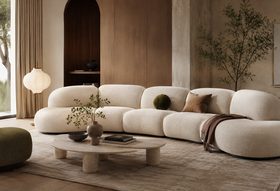
Foam has always sat beneath upholstered furniture, but designers are increasingly making its possibilities more visible. Curved seating, sculptural headboards, modular blocks and acoustic wall features all rely on materials that can be cut, layered and shaped efficiently.
The result isn't simply a softer interior. Foam allows designers to create forms that would be heavy, rigid or difficult to build using traditional materials alone.
Curved and sculptural furniture
Rounded sofas, bulbous chairs and wave-shaped benches have become prominent in residential and hospitality interiors. Flexible polyurethane can be laminated and profiled over a frame to create smooth continuous curves.
The internal grade still needs to match the use. A dramatic shape will lose its appeal quickly if the seat foam is too soft or the edge support collapses.
Modular seating
Moveable foam blocks and sectional cushions allow a room to change from individual seating to a larger social arrangement. They're popular in family rooms, studios and flexible commercial spaces.
Modules need enough weight and grip to remain stable. Hidden connectors, non-slip bases and durable covers prevent the pieces drifting apart during use.
Upholstered walls and headboards
Large padded headboards bring colour and texture into bedrooms, while upholstered wall panels soften corridors, restaurants and lounge areas.
Foam provides the profile beneath fabric, from simple flat rectangles to channels and deep buttoning. Decorative panels should be fixed securely and kept clear of heaters, sockets and safety equipment.
Acoustic design as part of the interior
Acoustic treatment is increasingly integrated into the visual scheme. Foam panels can form geometric wall art, ceiling features or concealed absorbent layers behind fabric.
Open-cell acoustic foam reduces echo and reverberation, making speech and music clearer. It doesn't replace dense construction where the aim is to stop noise passing between rooms.
Soft zoning in open spaces
High-backed booths, upholstered screens and padded seating define areas without permanent walls. They provide visual separation and absorb some nearby speech, which is useful in offices and hospitality venues.
For genuine confidentiality, the surrounding construction and door seals still matter. A screen can reduce distraction but can't create a soundproof meeting room.
Bespoke window seats and banquettes
Made-to-measure foam allows designers to use alcoves, bay windows and awkward corners. A template can be converted into a precise cushion with clipped corners, curves or a tapered front – see our guide to DIY window seat cushions.
Banquettes need firm durable seating foam and a strong base. Decorative window seats used occasionally can have a softer feel.
Layered comfort
Designers combine a supportive foam core with softer comfort layers, fibre wrap and tailored covers. This creates a full appearance without making the entire cushion excessively soft.
Memory foam may be used as a surface layer in loungers and daybeds, while reconstituted foam supports firm bases and plinths.
Colour and visible foam
Closed-cell foams are available in colours and can be used openly for displays, props and contemporary objects. Clean cut edges and layered contrast create a graphic appearance.
Visible foam should be specified for light exposure, cleaning and fire performance. A colour choice should never override the technical needs of the application.
Material efficiency and reuse
Digital nesting and made-to-measure cutting reduce unnecessary waste. Clean offcuts can be used in smaller pads, craft projects or crumb products, and reconstituted foam incorporates recovered polyurethane pieces.
Sustainability claims should consider service life as well as recycled content. A durable cushion that can be re-covered and re-foamed may offer better long-term value than an entire item designed for disposal.
Turning a design into a practical product
Draw the finished dimensions, define load and thickness, and decide how the cover will be removed. Check fire requirements early, particularly for hotels, restaurants, offices and public buildings. For commercial projects, see our guide to commercial upholstery foam.
With eFoam's foam cut-to-size service, designers can order standard shapes or provide details for unusual profiles. The strongest interiors use foam creatively while respecting support, safety and maintenance.
Frequently asked questions
How is foam used in modern interior design?
Designers use foam for curved and sculptural furniture, modular seating, upholstered walls and headboards, integrated acoustic features, soft zoning with screens and booths, bespoke window seats and banquettes, and layered comfort. It lets them create forms that would be heavy, rigid or difficult to build with traditional materials alone.
What foam is used for curved furniture?
Flexible polyurethane can be laminated and profiled over a frame to create smooth, continuous curves for rounded sofas, bulbous chairs and wave-shaped benches. The internal grade still needs to match the use – a dramatic shape loses its appeal quickly if the seat foam is too soft or the edge support collapses.
Can foam be used for acoustic wall features?
Yes. Open-cell acoustic foam can form geometric wall art, ceiling features or concealed absorbent layers behind fabric, reducing echo and reverberation so speech and music are clearer. It doesn't replace dense construction where the aim is to stop noise passing between rooms.
What foam is best for upholstered headboards and walls?
Foam provides the profile beneath the fabric, from simple flat rectangles to channels and deep buttoning. Choose a grade suited to the look and durability needed, fix decorative panels securely, keep them clear of heaters, sockets and safety equipment, and check fire performance early for commercial settings.