




How to Choose the Best Foam for Outdoor Garden Furniture

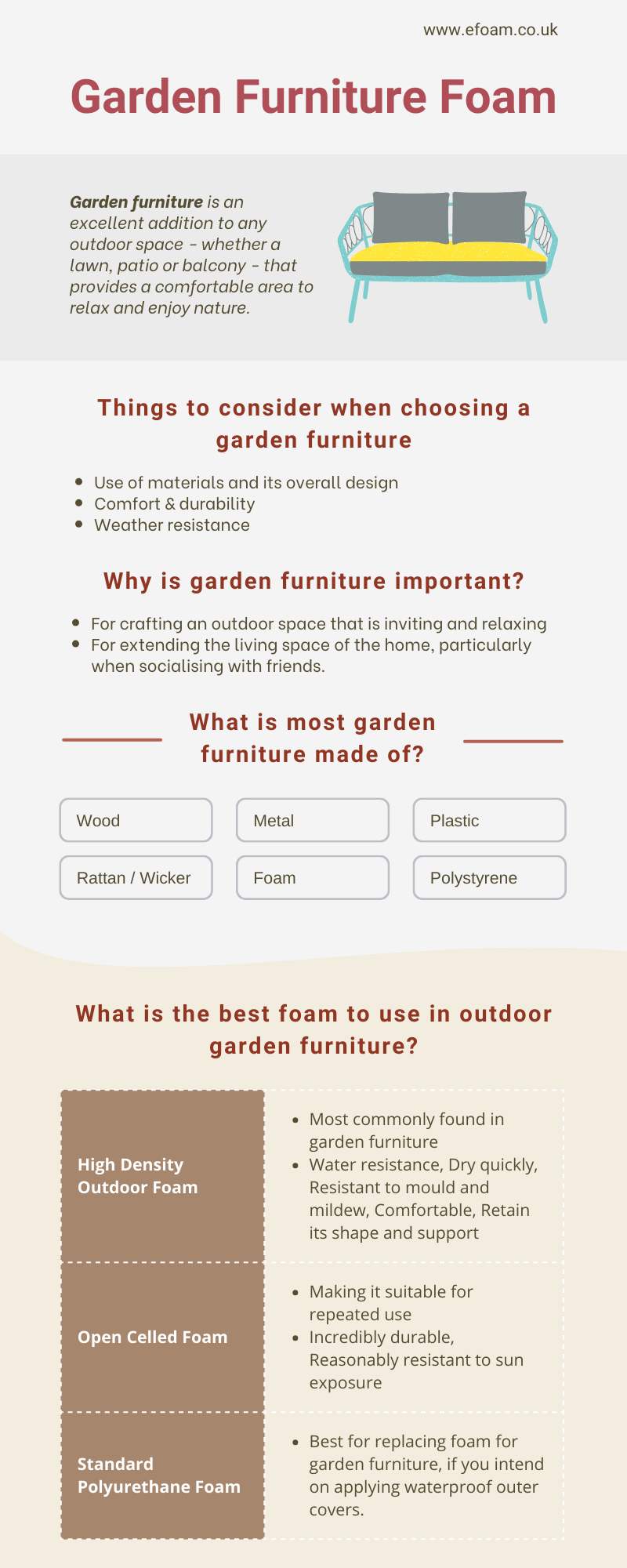
A UK expert's guide to garden furniture foam: why the right cushion foam matters, what to consider when choosing outdoor furniture, how to measure and cut replacement foam, and how to care for it so it lasts. Garden furniture is a valuable addition to any outdoor area – lawn, patio or balcony – creating a comfortable spot to relax and appreciate nature. Beyond comfort, it adds functionality and aesthetic appeal, helping to craft inviting environments for relaxing, dining and socialising outdoors.
Things to consider when choosing garden furniture
Material selection matters
Selecting the right materials for your garden furniture is vital for performance, durability and appearance – and that applies just as much to what's inside the cushions as to the frame.
Comfort starts with cushion quality
How the cushions and seat pads feel makes all the difference to how much the furniture actually gets used. Specialist outdoor foam is designed to be comfortable while still giving the support you need.
Weather-resistant design
Quality outdoor foam can handle getting wet and spending time in the sun without breaking down, and it resists mould, so the furniture stays in shape season after season.
Why is garden furniture important?
Garden furniture is essential for crafting an outdoor space that is inviting and relaxing. For those living in smaller spaces, a welcoming and comfortable outdoor spot effectively extends the living space of the home, particularly when socialising with friends.
What is most garden furniture made of?
Garden furniture is typically made from materials that withstand changing weather conditions, the most popular being wood, metal, plastic and rattan or wicker, available at different price points depending on design, quality or brand. Some garden furniture is entirely soft – for example, foam or polystyrene-based outdoor bean bags.
What is the difference between outdoor and indoor foam?
Indoor foam is made primarily for comfort at home, so it tends to be softer and lighter. Outdoor foam is much tougher: it's denser and specially treated so it can hold up against rain, sun and mildew. The key point is that outdoor foam needs to survive all kinds of weather while still staying comfortable and keeping its shape, year after year.
What is the best foam to use in outdoor garden furniture?
High-density outdoor foam
The foam most commonly found in garden furniture. It has excellent water resistance, dries quickly and resists mould and mildew, and thanks to its high density it's comfortable yet retains its shape and support with little sag despite varying weather and temperatures. Where possible, select a foam treated with antimicrobial agents for extra protection against mould and bacteria.
Open-celled foam
Incredibly durable and suited to repeated use, open-celled foam is also reasonably resistant to sun exposure – essential for life outdoors. Water drains through its structure rather than pooling, provided it can dry properly afterwards.
Standard polyurethane foam
If you're replacing foam in garden furniture, standard polyurethane foam is a cost-effective choice provided you fit waterproof outer covers to protect it. For related projects, see our guides to pallet furniture foam and foam for a DIY balcony.
Measuring and cutting replacement foam for garden furniture
Replacing tired foam is one of the cheapest ways to give garden furniture a new lease of life, and it only takes a few steps:
1. Measure the covers, not the old foam. Old foam is usually compressed out of shape, so measure the length, width and depth of the cushion covers instead. For bench and pallet seats, measure the base area the foam needs to cover. Our video guides show exactly how to measure a cushion.
2. Choose your foam and thickness. For seat pads, 2" to 4" thick foam suits most garden furniture; go firmer and thicker for benches and pallet seating that sits on a hard base.
3. Order it cut to size. Rather than cutting foam yourself with a blade, use our foam cut to size tool to order the exact dimensions and shape you need, including tapered or shaped pieces – every piece is precision-cut, so it fits the cover snugly first time.
4. Fit and finish. Adding a stockinette undercover makes the foam easier to slide into covers and helps it hold its shape, and waterproof covers will significantly extend its life outdoors.
Maintenance tips for garden furniture foam
A simple care routine prevents sagging, mould and crumbling, and can add years to your cushions:
Let it dry properly. After heavy rain, stand cushions on their edge in a ventilated spot so water drains and air circulates. Never store foam wet.
Store over winter. Bring cushions indoors or into a dry shed or garage over winter and during long wet spells – this is the single biggest factor in how long they last.
Clean gently. Spot-clean covers and foam with mild soapy water, rinse and air dry fully. Avoid harsh chemicals, which degrade both foam and water-resistant treatments.
Rotate and flip. Turn cushions regularly so wear and sun exposure spread evenly, preventing permanent dents in the most-used spots.
Should you need any help ordering outdoor foam for your garden furniture, please contact one of our friendly advisers.