




How to Repair or Replace Car Seat Foam

Car seats are crucial for a comfortable driving experience, but they wear out or become damaged over time. Replacing or repairing car seat foam cushions can revitalise your seats and significantly enhance comfort. Here is step-by-step guidance for repairing or replacing your vehicle seat foam.
What type of foam is used in car seats?
Car seats are often made of high-density polyurethane (PU) foam, chosen for its durability, comfort and ability to hold its shape over time. High-density PU foam offers robust support while remaining resilient enough to bear the weight and strain placed on it while driving.
How long does car seat foam last?
The lifespan of vehicle seat foam varies with usage, material quality and maintenance. On average, high-quality vehicle seat foam lasts 7 to 10 years, and regular cleaning and maintenance can help extend its life.
How thick is car seat foam?
Vehicle seat foam is commonly 2 to 4 inches thick, though the actual thickness varies by car model and seat design. If you're replacing the foam, measure the existing piece carefully to ensure a perfect, comfortable fit.
How to cut foam for a car seat
Cutting foam for a car seat requires precision and the right tools:
- Measure the existing foam to determine the dimensions, so the new piece fits perfectly.
- Mark the foam, outlining the required piece size with a marker.
- Use the right tools – a sharp, clean utility knife or an electric carving knife is ideal.
- Cut slowly and steadily, following the marked lines to create clean, straight edges.
- Smooth the edges afterwards with fine-grit sandpaper to remove any rough edges.
How to replace car seat foam
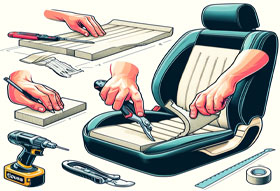
- Remove the seat from the vehicle, which typically means unbolting it from the floor and disconnecting any electrical connections.
- Remove the upholstery, carefully taking off the seat cover, which may involve clips, screws or other fasteners.
- Remove the old foam pad, noting how it fits into the seat frame.
- Cut the new foam, using the old foam as a pattern for the size and shape.
- Install the new foam in the seat frame, ensuring it fits tightly and securely.
- Reattach the upholstery, making sure it is smooth and tightly fitted.
- Reinstall the seat in the car and reattach any electrical components.
Where to buy foam for car seats
eFoam offers high-quality foam for vehicle seats, including a wide range of high-density polyurethane foam sheets ideal for automotive use. Whether you're repairing worn-out foam or improving your car seats, we can also supply your new car seat foam cut to size and shape. For more, see our guides to car seat foam and foam in the automotive industry.
Following this guidance will help you successfully repair or replace your vehicle seat foam, keeping your seats comfortable and supportive for years. Please contact us if you need any further assistance.