





The Essential Guide to Pipe Insulation Foam
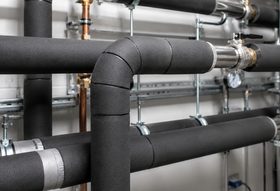
Pipe insulation is a relatively small part of a building, but it can make heating and water systems more efficient and easier to manage. The correct insulation reduces heat loss from hot pipes, limits heat gain into cold services and helps prevent condensation.
Foam products are widely used because they're lightweight, flexible and straightforward to fit around many domestic and commercial pipes.
What is pipe insulation foam?
Pipe insulation foam is a tubular or sheet material fitted around pipework. Pre-slit tubes are common for straight lengths, while sheets and tape are useful around valves, bends and larger fittings.
The material traps still air and slows heat transfer. Closed-cell construction is particularly useful on cold pipes because it resists water vapour passing through the insulation.
Why insulate pipes?
Hot-water and heating pipes lose energy as heat moves into the surrounding air. Insulation keeps more heat in the system, particularly where pipes pass through lofts, garages, cupboards or unheated voids.
Cold-water and refrigeration pipes can fall below the dew point of the surrounding air. Without suitable insulation, moisture condenses on the pipe surface, leading to drips, corrosion and damage to nearby finishes.
Insulation can also provide limited protection against freezing, although it doesn't create heat. Pipes in very cold areas may still need trace heating or other frost-protection measures.
Common foam materials
Polyethylene pipe insulation
Flexible polyethylene is a closed-cell foam used for domestic heating and plumbing. It's light, economical and available in sizes matched to common pipe diameters.
Elastomeric rubber foam
Elastomeric insulation is flexible and has strong resistance to water vapour. It's widely used for refrigeration, air-conditioning and chilled-water services where condensation control is critical.
Rigid polyurethane or PIR sections
Rigid insulation sections can provide high thermal performance on larger or higher-temperature services. They normally require a protective outer covering and careful sealing at joints.
The correct choice depends on service temperature, environment, pipe size and any fire-performance requirements.
Choosing the correct size and thickness
The internal diameter should fit the pipe closely without stretching the insulation open. An oversized tube leaves an air gap and is difficult to seal; an undersized tube may split or compress unevenly.
Insulation thickness is determined by pipe temperature, ambient conditions, required energy performance and condensation risk. Building-services specifications may set a minimum thickness, so don't rely on appearance alone.
How to install foam pipe insulation
Turn off and cool hot services before working. Clean and dry the pipe, then measure each straight section. Cut the insulation square with a sharp knife and fit it around the pipe without crushing it.
Close the longitudinal slit and seal it using the system recommended by the insulation manufacturer. Butt adjoining lengths together and seal the joint. At elbows, mitred pieces create a neater fit than forcing a straight tube around a tight bend.
Pay particular attention to valves, brackets and wall penetrations. Gaps in cold-service insulation can allow water vapour to reach the pipe and create local condensation.
Common installation mistakes
The most frequent problem is leaving joints unsealed. Compressing the insulation beneath clips, using incompatible adhesive, or failing to continue the vapour barrier around fittings can also reduce performance.
Outdoor insulation needs protection from sunlight, weather and physical damage. Standard indoor foam shouldn't be left exposed unless the manufacturer confirms it's suitable. For broader context, see our guide to insulating your home.
Can ordinary foam sheets be used?
Closed-cell foam sheets can be fabricated into pads, thermal breaks and insulation components, but a purpose-made pipe system is usually easier for continuous pipework. Where bespoke shapes are needed around equipment, closed-cell polyethylene foam can be cut and laminated to the required dimensions. You may also find our guide to foam in construction useful.
Always check temperature limits, fire performance and compatibility with the pipe and adhesive. For unusual industrial applications, contact eFoam with the service conditions and required size.
Frequently asked questions
What is the best foam for insulating pipes?
It depends on the service. Flexible polyethylene closed-cell foam suits domestic heating and plumbing; elastomeric rubber foam is preferred for refrigeration, air-conditioning and chilled-water services where condensation control is critical; and rigid polyurethane or PIR sections give high thermal performance on larger or higher-temperature pipes. Choose based on service temperature, environment, pipe size and any fire-performance requirements.
Does foam pipe insulation prevent frozen pipes?
It offers limited protection by slowing heat loss, but it doesn't create heat. Pipes in very cold areas may still need trace heating or other dedicated frost-protection measures in addition to insulation.
How thick should pipe insulation be?
Thickness is determined by pipe temperature, ambient conditions, the energy performance required and condensation risk – not by appearance. Building-services specifications often set a minimum thickness, so check the relevant specification rather than guessing.
How do I stop condensation on cold pipes?
Use a closed-cell insulation that resists water vapour, fit it closely with no air gap, and seal the longitudinal slit and all butt joints. Pay particular attention to valves, brackets and wall penetrations, because any gap in the vapour barrier lets moisture reach the pipe and cause local condensation.