




Soundproof Panels: A First-Time Buyer's Guide
Shopping for soundproof panels can be confusing because the same phrase is used for very different products. Some panels absorb echo inside a room, while others form part of a wall or ceiling system designed to reduce sound transmission.
Before comparing shapes and prices, identify the problem you need to solve.
What are soundproof panels?
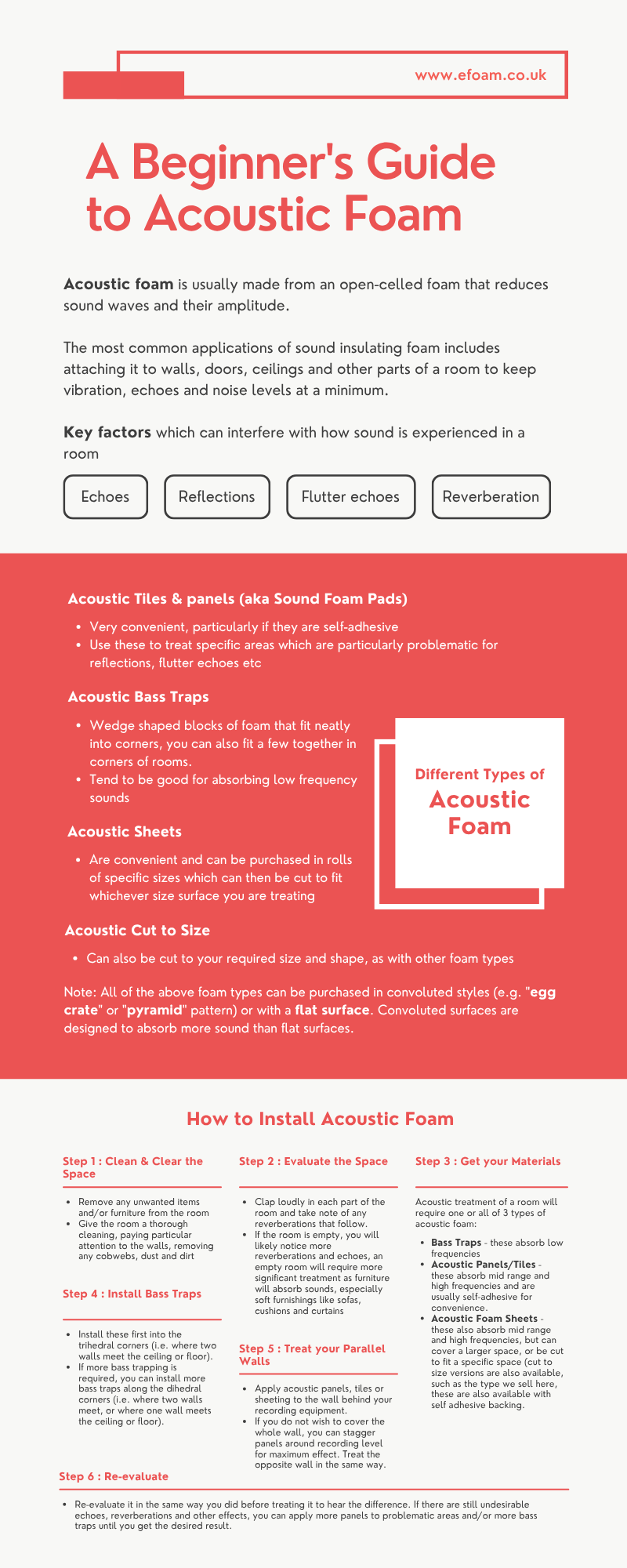
In everyday use, the term often refers to acoustic foam tiles or fabric-covered absorbers. These porous products reduce reflected sound and make a room less reverberant. They're useful in studios, offices, podcast rooms, home cinemas and noisy communal spaces.
True sound-insulating panels are generally heavier and may include dense boards, resilient layers or composite barriers. They work as part of a complete construction, with sealed joints and attention to flanking paths.
Do acoustic panels block outside noise?
Not to any significant degree. Lightweight foam contains too little mass to stop traffic, voices or music passing through a wall. It may make the sound inside the room feel clearer, which is valuable, but it doesn't repair a weak partition.
For noise entering or leaving a room, investigate the wall, door, glazing, ceiling void and ventilation openings. Sound often finds the easiest route rather than travelling only through the area you can see. Our guide to common acoustic problems and their solutions explains how to tell the difference.
Common acoustic panel types
Flat foam panels
Flat open-cell foam provides a clean appearance and predictable coverage. It can be cut to size for walls, ceilings and machinery enclosures.
Convoluted foam
Egg-crate or pyramid profiles increase surface area and create a familiar studio look. The shape can help scatter and absorb sound, but overall thickness remains important.
Fabric-covered panels
These normally contain a porous absorbent core behind an acoustically transparent fabric. They suit offices, restaurants and interiors where colour and finish are important.
Ceiling baffles and rafts
Suspended products absorb sound on more than one face and are useful where wall area is limited. Fixings must be designed for the weight and ceiling construction.
Bass traps
Bass traps are thicker absorbers placed in corners, where low-frequency energy often builds up. Thin wall tiles can't perform the same role.
What should you check before buying?
Start with thickness and coverage. Very thin tiles may reduce a little high-frequency reflection but won't correct a severe room problem. Ask for acoustic test information where performance matters.
Check fire classification, especially in commercial, public or multi-occupancy buildings. "Fire retardant" isn't a complete specification, and requirements vary with the application.
Consider the environment. Standard polyurethane acoustic foam should be kept dry and away from heat sources. For humid, oily or industrial conditions, a different product or protective facing may be required.
How many panels are needed?
Room volume, surface finishes and use all matter. A small meeting room with glass walls behaves differently from a carpeted bedroom or large warehouse.
For speech and recording, begin at first-reflection points and opposing hard surfaces. Treating parts of the ceiling can be particularly effective in open offices. Listen and measure where possible before covering every wall.
How should panels be installed?
Plan the layout, check the substrate and use a fixing method suitable for both the panel and the wall. Self-adhesive backing is quick, while spray adhesive provides broad coverage. Removable frames are useful where walls must be protected.
Don't place panels over electrical equipment, ventilation grilles, detectors or escape signage. Follow the adhesive and fire-safety instructions, and see our guide on how to install acoustic foam.
Avoid common buying mistakes
Don't buy solely by appearance. A dramatic wedge pattern isn't automatically more effective than a thicker flat panel. Avoid claims that a few tiles will stop neighbour noise or completely soundproof a room.
Also check the size carefully. Product photographs can make small tile packs appear to cover more wall area than they do.
Choosing panels from eFoam
eFoam supplies flat, convoluted, self-adhesive and Class 0 options within its acoustic foam panel range. Bass traps are available for corner treatment where low-frequency control is required.
For a useful recommendation, provide the room dimensions, wall and ceiling finishes, intended use and the problem you can hear. That information is far more valuable than simply asking for the "best soundproof panel".
Frequently asked questions
Do acoustic foam panels block outside noise?
Not to any significant degree. Lightweight foam has too little mass to stop traffic, voices or music passing through a wall. It can make the sound inside a room feel clearer, which is valuable, but it doesn't repair a weak partition. For noise entering or leaving a room, investigate the wall, door, glazing, ceiling void and ventilation openings.
How thick should acoustic panels be?
Thickness matters more than profile. Very thin tiles may reduce a little high-frequency reflection but won't correct a severe room problem, and bass control in particular needs thick corner traps. Ask for acoustic test information where performance matters rather than choosing by appearance.
How many acoustic panels do I need?
It depends on room volume, surface finishes and use – a glass-walled meeting room behaves very differently from a carpeted bedroom or large warehouse. For speech and recording, begin at first-reflection points and opposing hard surfaces, and treat part of the ceiling in open offices. Listen and measure where possible before covering every wall.
What should I check before buying soundproof panels?
Start with thickness and coverage, then check fire classification – especially in commercial, public or multi-occupancy buildings, where "fire retardant" alone isn't a complete specification. Consider the environment too: standard polyurethane acoustic foam must be kept dry and away from heat, so humid or industrial settings may need a different product or protective facing.