





Styrofoam in Schools: What You Need to Know
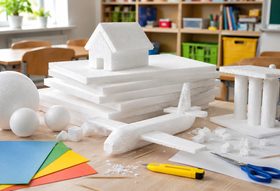
The word Styrofoam is often used for any lightweight white polystyrene packaging. Strictly speaking, Styrofoam is a trademark associated with a particular extruded polystyrene insulation product. Cups, food trays and moulded packaging are more commonly made from expanded polystyrene, or EPS.
That distinction matters because different foams have different properties, fire behaviour and appropriate uses.
Where is polystyrene used in schools?
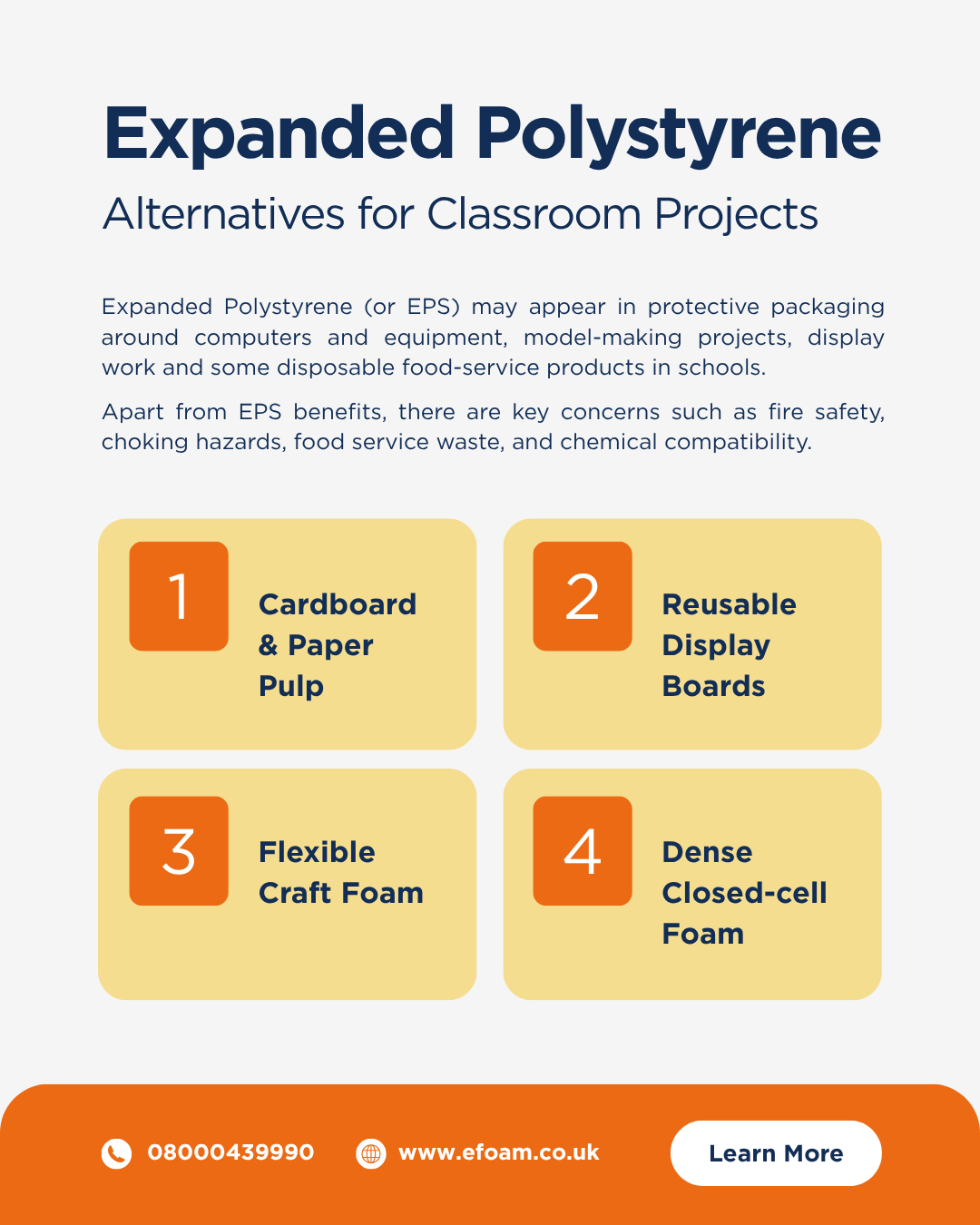
EPS may appear in protective packaging around computers and equipment, model-making projects, display work and some disposable food-service products. Rigid polystyrene insulation may also be present within the building fabric.
A material suitable inside a wall or shipping carton isn't automatically suitable for an unsupervised classroom craft.
Benefits of EPS
Expanded polystyrene is light, inexpensive and provides useful cushioning and thermal insulation. It can be moulded into protective shapes and is easy to cut for simple models.
Its low weight reduces transport mass, but it also means loose beads and fragments can spread easily if the material is broken.
Common concerns
Fire
Polystyrene is combustible and must be kept away from flames, hot wires, heaters and high-temperature equipment unless it forms part of an approved construction. Heating or burning foam can produce hazardous fumes. Classroom cutting should use safe mechanical methods with appropriate adult supervision.
Small pieces
Broken beads can present a choking risk to young children and are difficult to clean from outdoor areas. Don't use loose fragments where they may be swallowed or enter drains.
Food service
Disposable foam trays and cups create a large waste stream and may not be accepted by local recycling facilities. Schools should follow current food-contact rules and local authority waste arrangements.
Chemicals and adhesives
Some solvent-based paints and glues attack polystyrene. Use products specifically marked as compatible and test on a small piece first.
Is polystyrene recyclable?
Clean EPS can be recycled by specialist facilities, but kerbside acceptance is limited. Its bulk and low weight make collection challenging.
Schools should ask their waste contractor what is accepted rather than placing foam in a recycling bin based on the symbol alone. Reusing clean packaging for art or future shipping can be sensible, provided storage is safe and fire loading is considered.
Better material choices for classroom projects
Cardboard, paper pulp and reusable display boards may be easier to recycle for temporary work. Flexible craft foam is useful for costumes and tactile shapes, while dense closed-cell foam can make durable models and protective pads.
Select material by age group, tools, expected lifespan and disposal route. There's no need to use an industrial foam where card will do the same job. Our guide to foam for school projects has more ideas.
Foam for seating and sensory spaces
Classroom cushions and reading corners should use proper upholstery foam with suitable covers and relevant fire performance. Random packaging foam isn't designed for repeated seating.
Sensory equipment, crash mats and soft-play products are safety-critical and should be purchased as tested complete products rather than assembled from offcuts.
Building insulation
Rigid foam insulation within a school must form part of a compliant building system, protected and installed according to the design. Staff shouldn't cut into wall or ceiling materials without checking surveys and construction information. See our guide to foam fire-safety standards for context.
Responsible use
Keep foam away from heat, label stored materials and supervise cutting. Collect small pieces promptly and avoid sending clean large packaging to landfill where a local reuse or specialist recovery route exists.
For safe craft, padding and project materials, eFoam supplies a range of foam sheets and offcuts. Tell us the intended use so an upholstery, closed-cell or packaging grade can be selected appropriately.
Frequently asked questions
Is Styrofoam the same as polystyrene?
Not exactly. "Styrofoam" is often used loosely for any white polystyrene packaging, but strictly it's a trademark associated with a particular extruded polystyrene insulation product. Cups, food trays and moulded packaging are more commonly made from expanded polystyrene (EPS). The distinction matters because different foams have different properties, fire behaviour and appropriate uses.
Is polystyrene recyclable?
Clean EPS can be recycled by specialist facilities, but kerbside acceptance is limited and its bulk and low weight make collection challenging. Ask your waste contractor what is actually accepted rather than placing foam in a recycling bin based on the symbol alone; reusing clean packaging for art or shipping can be sensible if stored safely.
Is polystyrene safe for classroom craft?
It can be, with supervision. Polystyrene is combustible and must be kept away from flames, hot wires and heaters, and heating or burning it produces hazardous fumes – so classroom cutting should use safe mechanical methods. Broken beads can be a choking risk for young children, so collect small pieces promptly.
What is a better alternative to Styrofoam for school projects?
Cardboard, paper pulp and reusable display boards are often easier to recycle for temporary work. Flexible craft foam suits costumes and tactile shapes, while dense closed-cell foam makes durable models and protective pads. Choose by age group, tools, lifespan and disposal route – there's no need for industrial foam where card will do.