





Are Foam Mattresses Safe? Discover the Truth About Hidden Toxins
Foam mattresses are among the most popular in the UK, but stories about "toxic mattresses" leave many buyers unsure what to believe. The truth sits in the middle: some chemicals historically used in foam mattress manufacturing do carry health risks, yet a responsibly made foam mattress from a reputable manufacturer is safe for everyday use. This guide separates the myths from the facts, explains which chemicals to look out for, and shows how to choose a safer mattress.
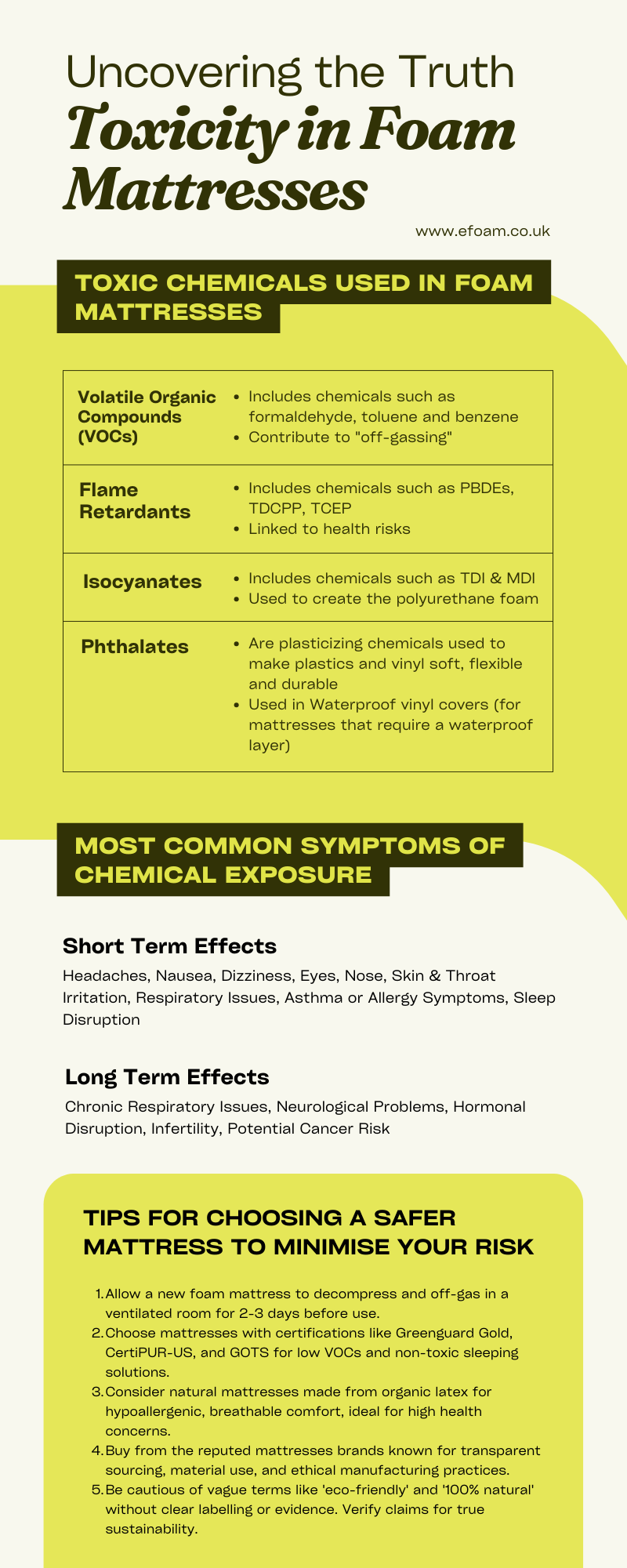
Toxic chemicals used in some foam mattresses
Volatile Organic Compounds (VOCs): include chemicals such as formaldehyde, toluene and benzene, and are what cause the "off-gassing" smell of some new mattresses.
Flame retardants: older or lower-quality mattresses may use chemical flame retardants such as PBDEs, TDCPP and TCEP, which have been linked to health risks.
Isocyanates: chemicals such as TDI and MDI are used in creating polyurethane foam. In a finished, properly cured mattress from a responsible manufacturer they do not pose a risk in normal use.
Phthalates: plasticising chemicals used to make plastics and vinyl soft, flexible and durable, found in some waterproof vinyl covers on mattresses that require a waterproof layer.
Most common symptoms of chemical exposure
Short-term effects can include headaches, nausea, dizziness, irritation of the eyes, nose, skin and throat, respiratory issues, asthma or allergy symptoms, and disrupted sleep.
Long-term exposure to some of these chemicals has been associated with chronic respiratory issues, neurological problems, hormonal disruption, infertility and potential cancer risk. This is why it matters where and how your mattress is made.
Tips for choosing a safer mattress to minimise your risk
1. Air it out. Allow a new foam mattress to decompress and off-gas in a ventilated room for 2 to 3 days before use.
2. Look for certifications. Mattresses with certifications such as Greenguard Gold, CertiPUR-US and GOTS are tested for low VOCs and non-toxic sleeping solutions.
3. Consider natural materials. Organic latex mattresses offer hypoallergenic, breathable comfort for those with high health concerns.
4. Buy from reputable brands. Choose manufacturers known for transparent sourcing, material use and ethical manufacturing practices.
5. Question vague claims. Be cautious of terms like "eco-friendly" and "100% natural" without clear labelling or evidence, and verify claims for true sustainability.
The facts about UK-made eFoam mattresses
Where your mattress is made matters. Our premium memory foam mattresses are manufactured in the UK and do not contain PBDEs or chlorofluorocarbons (CFCs), which are often found in lower-quality foam from overseas. They are naturally antibacterial and hypoallergenic, comply with stringent fire regulation British Standard 7177, and come with a 5 year warranty. For the full picture of what goes into a quality mattress, see our mattresses and toppers range, or contact one of our friendly advisers.
Frequently asked questions
How long does it take for a foam mattress to off-gas?
Most new foam mattress odour fades within 2 to 7 days. Allowing the mattress to decompress in a well-ventilated room for the first few days speeds this up considerably.
Are foam mattresses safe for babies?
Choose a firm, flat nursery-grade foam mattress that meets UK safety standards for your baby, and avoid soft surfaces and memory foam for infants. If in doubt, ask the manufacturer to confirm which standards the mattress complies with.
Are eFoam mattresses free from these chemicals?
eFoam memory foam mattresses are made in the UK and do not contain PBDEs or chlorofluorocarbons (CFCs), which are often found in lower-quality foam from overseas. They are naturally antibacterial, hypoallergenic and comply with fire regulation British Standard 7177.