





Foam Density vs Foam Weight vs Foam Firmness: What's the Difference?
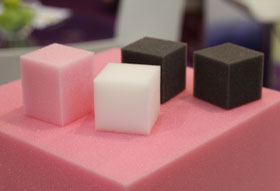
A UK expert's guide to choosing the right foam for your upholstery and DIY projects. Density, weight and firmness are often used interchangeably, but they describe three distinct physical properties that affect comfort and longevity. In short: density is the best measure of foam quality and durability, indicating how long it will last before sagging; firmness (measured by ILD) determines the immediate feel or hardness of the foam; and weight is simply the physical mass of the material, based on its size and density. Together, these three factors help you choose a foam that balances long-term support with personal comfort for any project.
What is foam density?
In simple terms, foam density measures the strength of a piece of foam, and it's the property that tells you most about longevity. It's usually given as a decimal indicating the number of pounds each cubic foot of foam can support. The greater the density, the more supportive and longer-lasting the foam, but a greater density doesn't necessarily mean a firmer product, and density doesn't determine comfort either.
Density varies between products as each foam type has different properties, so foam can't be directly compared by density alone. Higher-density products tend to be more expensive than lower-density ones, and densities often range from 0.5 up to 6 or more.
What is foam firmness?
When manufacturers or retailers talk about firmness, they mean a measure known as Indentation Load Deflection (ILD), and it's the property that determines how the foam feels. Every foam product has an ILD rating, calculated by placing the foam under pressure: once it has compressed to 25% of its original thickness, the weight used to achieve this constitutes the ILD rating.
What is foam weight?
Foam weight is the most misunderstood of the three, but it's simply the actual physical weight of the product, as you'd measure it on scales. Weight increases with density (a higher density means greater overall weight) and, naturally, with the thickness and size of the piece. A good example is a foam mattress: a denser mattress feels far heavier in transit than a lower-density version.
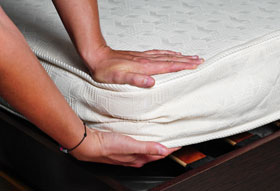
The relationship between density, firmness and weight
Density and firmness aren't directly related. A higher-density foam isn't automatically firmer, and a lower-density foam isn't automatically a squishy one – low-density foams can feel just as firm. Overall firmness is simply how much a foam compresses under pressure, measured as an ILD rating. When choosing density and firmness, consider the user's weight: a heavier person should opt for a mattress that's both denser and thicker, as a lower-density product won't provide adequate support. For more on choosing the right material, see our guide to open-cell vs closed-cell foam.
How to gauge foam density and firmness
A good manufacturer or retailer such as eFoam can tell you the density and firmness of any product, as it's determined at the manufacturing stage. You can also estimate density yourself: density equals weight divided by volume, that is, weight ÷ (width × height × length). Because firmness is measured under controlled conditions, we can provide the exact ILD rating of your product – though firmness is largely down to personal preference, so you'll only really know by trying a product.
How comfortable is high-density foam?
High-density foam is praised for being comfortable thanks to its supportive qualities. For most people it offers great postural support in chairs, sofas and mattresses, which is where it's mostly found. You can read more about the grades we recommend on our high density foam page, and if you're weighing up cost, our guide to cheap vs quality foam may help.
How to choose the right foam for your project
The right balance of density and firmness depends on what the foam is for. These are the combinations we recommend most often after more than 40 years of cutting foam for UK homes:
Sofa cushions: seat cushions take the most punishment of any foam in the home, so prioritise density over initial softness. A high-density foam in a medium to firm feel will keep its shape for years, where a cheaper low-density foam will sag within months. If your existing cushions have gone flat, our cushion refill service can replace just the foam inside your covers.
Dining chairs: because the foam is thin (usually 1" to 2") and you sit directly on it, choose a firmer feel than you would for a sofa. A firm high-density grade prevents you feeling the wooden base through the pad.
Boat and caravan seats: support matters here too, but so does moisture. A firm high-density or Reflex foam handles the constant use, and for anywhere that damp is a risk, consider closed-cell foam or add a stockinette and waterproof cover – our open-cell vs closed-cell guide explains the difference.
Outdoor cushions: standard open-cell foam works well outdoors provided it's paired with waterproof covers, or choose a foam designed to drain and dry quickly. Firmness is personal preference here, but a medium-firm feel copes best with garden furniture bases.
Every option above can be ordered to your exact measurements using our foam cut to size tool. If you're unsure which density or firmness suits your project, please contact one of our friendly advisers.