





Window Seat Cushions and Foam Cut to Size
Bespoke cushions for bay windows, banquettes, dormer seats and reading nooks

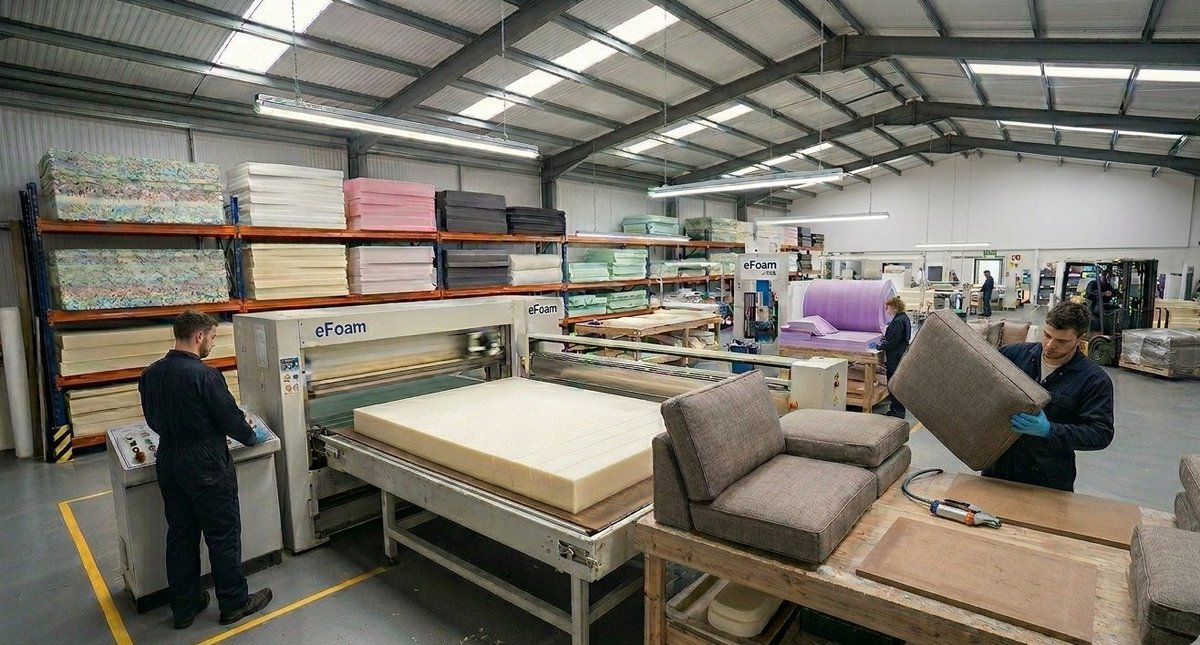
A Victorian bay window in a 1900s terrace is rarely as symmetrical as it looks from the outside. The bricklayer in 1895 wasn't worrying about millimetres, the angles drift twenty or thirty mil across the bay, the back wall has a slight bow that nobody notices until the cushion arrives and won't sit flush. We've been cutting bespoke foam cut to size for UK window seat owners for over 40 years. Bay windows, dining-room banquettes, loft dormer reading spots, kitchen booth benches, inglenook fireplace seats, lift-up storage benches in mudrooms and hallways. Most are made to bespoke shapes, if the seating area is a straightforward rectangle, simple measurements are usually enough, while bays, curves and angled spaces are best supplied as a paper template so we can cut the cushion accurately to fit.
Period properties are where most of our window seat work lives. Victorian and Edwardian bays that aren't quite symmetrical because the bricklayer 130 years ago didn't worry about millimetre accuracy. Georgian dormers in converted lofts. Arts & Crafts inglenook fireplaces with seating tucked into the chimney recess. The original cushions in these houses are often whatever the previous owner sourced thirty years ago: cheap polyether that has gone hard, flat, or developed that sunken middle look. The replacement foams we cut are high density & high quality grades as standard, High Firm where the window seat doubles as everyday family seating and a Memory foam topper option where it lives in a reading nook. Radiator hidden underneath the seat? That changes the spec slightly. More on that further down the page.
Bespoke is the norm rather than the exception with this work. Five-sided cushions following a half-hexagon bay. Six-sided cushions for the more curved bow windows of late-Victorian and Edwardian villas. Trapezium-shaped cushions where the bay angles inward at the ends. L-shaped pieces for corner banquettes around a kitchen table. Rectangle cushions for the simpler dormer recesses. We cut whatever the seating frame requires and if your existing covers are still good (heavy linen, canvas and tapestry-weight upholstery fabric lasts decades and is often colour-matched to curtains in the same room), you can send us the empty covers and we'll refill with new foam cushions through our cushion refill service rather than remake from scratch.
Common Window Seat Cushion Applications
Bay Window Seats
The classic - a bench built into the recess of a Victorian, Edwardian or modern bay window, often with a radiator hidden underneath the seating frame. Shape depends on the bay style. Half-hexagon (three-sided angular) bays usually need a five-sided cushion or a set of three trapezium pieces that meet at the angles. Curved bow windows want a six-sided cushion or a bespoke curved cut following the actual radius. A paper template is essential because the angles drift in older properties. Typical sizes are 1200-1800mm at the back wall, 350-450mm deep, 50-100mm thick.
Square and Rectangle Window Bench Cushions
The simpler shape - a window seat built into a flat reveal rather than an angled or curved bay. Common in newer extensions, cottage-style kitchens, garden room additions and any reveal that's been built as a square recess rather than a bay. Rectangle cushion with bullnosed front edge is the default. Worth measuring 5mm undersize on width and depth so the cushion settles into place without binding against the side walls.
Dormer Window Seats
The window seat tucked into the dormer of a loft conversion. Often in a child's bedroom, a teenager's space, or a home office. Usually a rectangle where the dormer has a flat seating base, occasionally shaped where the side cheeks of the dormer angle inward. Reflex foam with a Memory foam topper is the popular spec because these seats often double as a reading or screen-time spot. Lower thickness (50mm) is fine here because the seat is usually slightly less generous than a bay window seat.
Kitchen Banquette and Booth Cushions
L-shaped or U-shaped seating built around a kitchen breakfast table. Popular in farmhouse kitchens, period-property reconfigurations, and modern open-plan kitchens that copy the diner-booth look. Usually multiple separate pieces: long bench seats along each side, end-of-bench cushions, and corner blocks where the benches meet. Sometimes a matching set of back cushions if the backs aren't built into the seating frame. We cut everything from the same foam batch so the firmness stays consistent across the whole banquette.
Bedroom Window Seats
Reading-nook seating in the bedroom bay are usually shorter than dining-room banquettes, around 800-1200mm wide is typical. Often used as much for displaying cushions and a throw as for sitting on, so the spec can run softer than for a daily-use bench. Reflex with a Memory topper sits comfortably. Pure Memory foam tends to be too soft for window seats because people sit upright with their feet down rather than lying back on a sofa.
Inglenook Fireplace Seats
The bench seat tucked into the side of a large inglenook fireplace. Common in cottages, country houses, gastropubs that have kept their period features, and rebuilt period properties. Usually thicker than a window seat cushion (75-100mm) because the bench below is often unforgiving stone, slate, or solid oak. Heat exposure matters here, the cushion closer to the firebox sees more thermal cycling than the one at the far end, so Reflex foam handles the environment better than memory foam.
Storage Bench Top Cushions
The lift-up storage bench with a cushion sat on top. Common in mudrooms, hallway entry zones, kitchen window benches, and bedroom-end ottomans. The cushion gets lifted off (or rides up with the lid) every time someone gets into the storage underneath. We cut to your exact lid dimensions with a clean bullnosed/rounded-edge front, and a polyfibre wrap is worth adding for shape retention over years of being moved on and off. Common thicknesses are usually 50-75mm.
Which Foam Grade for Which Job?
Window seat work mostly comes down to four grades. Our full foam grades and types guide has the detail. Practical version:
 Reflex Foams. The default and what we'd recommend for most window seat cushions. Handles the typical use pattern (occupied for an hour at a time rather than all day), copes with sun exposure through the glass, and lasts well in the slightly damp environment around a window with condensation in winter. Lifespan in normal use is years rather than months. Suits bay window seats, dormer recesses, bedroom reading nooks, inglenook seats and storage bench tops.
 High Firm. The step up where the window seat is everyday family seating rather than occasional perching. Kitchen banquettes are the obvious case. Dining-room booths where the whole family eats every night. Window seats next to a kitchen island where someone leans against them through evening homework or laptop work.
 Medium (SF33). A softer grade for back-rest cushions paired with a firmer seat base, decorative bay-window seats that are admired more than sat on, and reading-corner cushions in children's rooms where extreme firmness isn't needed. Also worth specifying as the inner core of a thicker custom cushion (125mm and above) where the top surface comes from a firmer grade - gives the cushion bulk without the price or weight of solid Reflex throughout.
 Memory foam topper. A 25mm topper laid over a Reflex or High Firm base. The right move for reading-nook window seats where someone sits there for an hour at a time, in a bedroom or quiet corner. Adds noticeable comfort without making the cushion squashy. One caveat: skip the memory topper if your window seat has a radiator underneath. Heat from below shortens the life of memory foam significantly and it never quite recovers its bounce after a few winters of being warmed from underneath.
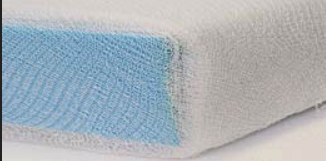 Polyfibre wrap (Dacron). Add-on for any window seat cushion. Softens the edge profile (especially useful for bullnosed/rounded-edge fronts), helps the cushion hold its shape over years of being sat on, and gives a more luxurious look under the cover. Worth specifying for any bay window cushion where the look matters as much as the comfort.
Period Properties and Listed Building Status
Plenty of our window seat work goes to period properties, including Grade I, II* and II listed buildings. The good news: replacing the cushion is not a listed building consent issue. The Listed Buildings Act protects the fabric of the building, the joinery, the seating frame, the panelling, the window glass and frames, and the architraves. The cushion that sits on top is removable soft furnishing and outside the scope of the listed protection.
What this means in practice: you can specify whatever foam grade, thickness and cover fabric you want for the cushion itself, the same as in any other house. You only need to involve the conservation officer or listed building consents team if you're proposing changes to the seating frame, the window reveal, the panelling around the seat, or any other part of the original fabric.
The fire safety regs that do apply are the Furniture and Furnishings (Fire) (Safety) Regulations 1988, which set the baseline standard for furniture fillings in UK homes regardless of building age. All our furniture-grade foam meets this by default. The 1988 regs apply equally to a brand-new home and a sixteenth-century manor house, they're about the cushion, not the building.
One thing worth noting for owners of properties where the window seat is part of the original specification (think Lutyens houses, Arts & Crafts cottages, and certain Edwardian mansions where the seating was designed in): the cushion is removable, but the seating frame underneath isn't. If you have a fabulously inlaid Edwardian bay seat frame with original Sanderson cushion covers, the foam refill is a straightforward job. Send the covers, we fit new foam, you keep everything that makes the room what it is. Contact our team if your property has specific listed-building cushion requirements - we can supply fire-rated foam with documentation.
Sun, Radiators and the Window Seat Environment
Window seats sit in a slightly different environment to the rest of the room. They can spend half the day in direct sunlight during summer, feel noticeably cooler beside the glass on winter mornings, and are often exposed to condensation around the window area during colder months. Many also have radiators positioned beneath the seating frame, pushing warm air and heat up through the cushion whenever the heating is on. A few simple habits can make a significant difference to how well a window seat cushion keeps its shape and lasts over time.
If your existing covers are still in good shape and the foam inside is just compressed or saggy, our cushion refill service can refit the same covers with fresh foam - no need to send measurements, we cut directly to the covers.
- Skip the Memory topper if there's a radiator underneath. Heat from below shortens memory foam life faster than anything else. Reflex foam handles it; Memory foam doesn't. The popular kitchen-banquette spec of Reflex plus a 25mm memory topper is the wrong choice for window seats with under-seat radiators.
- South-facing window seats see double the UV of north-facing ones. Plan to refresh the cushions on south windows more often than on north or east-facing ones. Or fit a blind or curtain that you can close during peak sun.
- Heavier fabrics fade more slowly than light ones. Canvas, tapestry weave, heavy linen and upholstery damask last decades. Cotton drill and lightweight upholstery cloth fade within a few summers if they're in direct sun.
- Mid-tone and dark colours show fading less than pale ones. A faded navy still looks navy. A faded cream looks tired.
- Watch condensation on cold winter mornings. Water can pool on the seating frame and seep into the cushion fabric if the windowsill drainage isn't great. Wipe the sill before the water reaches the cushion.
- Rotate cushions end-to-end every six months. Evens out fading and wear, and adds years to the practical lifespan of the cushion.
- Refill before replacing. Window seat cushion covers are often heavy upholstery fabric, colour-matched to curtains, and frequently part of a discontinued range. Refilling rather than remaking keeps the colour match and saves the cost of finding replacement fabric in a Sanderson or Morris & Co print that may no longer be produced.
How to measure for a bespoke window seat cushion
Four steps. Free next-day delivery to UK mainland on orders placed before noon. All work carried out at our ISO 9001 certified Bilston factory, cutting bespoke foam since 1983.
- Measure the seat surface. Take the full width and depth of the seat base in millimetres, corner to corner. For rectangular kitchen booths and banquettes, two numbers are enough. For curved or angled bay windows, take measurements at the front edge, the back, and at each angled section.
- Template irregular bay windows. Victorian and Edwardian bay windows are rarely true rectangles - the angles drift over a century and a half of settlement. Lay paper or newspaper on the seat, mark the outline with a pencil, and cut to shape. Send the template in with your order - bespoke foam cut to size to any template shape is included at no extra cost.
- Choose the right foam grade. Reflex Superior Firm for daily-use seats and reading nooks, High Firm SF38 for kitchen booths and banquettes where people sit for hours, and memory foam toppers for storage bench seats where guests sometimes sleep. Period properties may need Crib 5 fire-rated foam to satisfy listed building or insurance requirements.
- Order online for free next-day delivery. Place your order online before noon for free UK mainland next working day delivery. Whether you're fitting cushions to a Victorian bay window, an Edwardian dormer, a kitchen booth, an inglenook fireplace seat or a built-in storage bench, every cushion is foam cut to size to your exact measurements and ships with fire safety documentation.
Technical Specifications
Material: Polyether polyurethane foam (Reflex, High Firm); memory foam topper available; polyfibre wrap (Dacron) as an add-on for shape retention and edge softening
Fire compliance: Furniture and Furnishings (Fire) (Safety) Regulations 1988; the standard baseline for furniture cushions in UK homes regardless of building age or listed status
Common thicknesses: 40mm, 50mm, 75mm, 100mm (others available - just ask)
Maximum cut size: Up to 2000mm in any single dimension; longer banquettes supplied as jointed sections that butt cleanly under the cover
Delivery: Free next-day delivery to UK mainland on orders placed before noon, foam cut to size at our ISO 9001 certified Bilston factory
Contact: Questions before ordering? Contact our team - cutting bespoke window seat cushions since 1983
Bespoke cutting: Five-sided cushions for half-hexagon bays, six-sided for curved bow windows, trapezium pieces, L-shaped banquettes, dormer-recess rectangles, storage bench tops and full template cutting at no extra cost
Templates welcomed: Brown paper or flattened cardboard, drawn round the seating frame; send by post or photograph with measurements noted on
Lead time: Standard shapes next working day, bespoke templates 2-3 working days, full banquette sets quoted on request
If you'd rather talk it through than work it out from a spec sheet, give us a call on freephone 0800-0439990. Window seat cushion work covers a huge range of shapes and we can advise the right specification in a five-minute conversation. Or drop a line via the contact page and we'll come back to you the same working day.