





Acoustic Foam Solutions for Small Businesses

For many small businesses, unwanted noise can quickly disrupt productivity, comfort and customer experience. Acoustic solutions, especially foam-based products, offer a practical and affordable way to control sound. Acoustic foam is lightweight, versatile and effective, making it ideal for offices, cafes, shops and studios where both performance and easy installation matter. For the basics of fitting it, see our guide to installing acoustic foam.
Different types of acoustic treatment
Acoustic treatments typically serve three key functions, and foam products – tiles, sheets, panels and bass traps – play a role in each.
Sound absorption
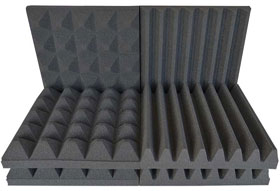
Acoustic foam is best known for its sound absorption. Its open-cell structure traps sound waves, reducing echo and improving clarity. Wall tiles, ceiling panels and sculpted profiles such as wedges or pyramids help create a more pleasant environment, particularly in small spaces with hard surfaces. Absorption is essential for speech intelligibility, customer comfort and professional audio quality.
Sound blocking (soundproofing)
Although blocking generally needs denser materials, acoustic foam still contributes when combined with other layers. Foam sheets can form part of a multi-layer soundproofing build-up, helping reduce airborne noise between adjoining rooms – especially useful for offices needing privacy or businesses in shared buildings.
Sound diffusion
Foam diffusers scatter sound for a more natural acoustic balance. They're often used alongside foam absorbers in music studios or creative workspaces to keep clarity without over-deadening the room.
Acoustic solutions by business type
For small offices
Office noise, from phone calls to general chatter, can be distracting. Acoustic foam tiles mounted on key wall areas or above meeting tables help minimise echo, improving focus and communication, while desk partitions with foam cores add privacy. Our guide to office sound booths and meeting rooms covers this in more depth.
For restaurants and cafes
Busy dining areas benefit greatly from acoustic foam panels. By reducing clatter and background echo, foam treatments create a calmer, more enjoyable atmosphere that encourages customers to stay longer and return.
For retail spaces
Retailers often want discreet, visually appealing solutions. Acoustic wedge or pyramid profile foams enhance decor while helping control ambient noise in changing rooms, display areas or customer-service desks.
For recording or music studios
Studios rely heavily on foam. Bass traps placed in corners control low frequencies, while acoustic foam tiles and diffusers manage mid and high frequencies, together creating a balanced environment for recording, mixing and rehearsal. Our guide to acoustic foam for podcasts and vlogging is a useful companion.
Creating a comfortable acoustic environment doesn't have to be complicated or costly. With the right foam-based solutions – available cut to size – even small businesses can dramatically improve their atmosphere, communication and customer experience. Whether you're reducing echo in a busy cafe or refining the sound in a studio, acoustic foam is a practical, adaptable and attractive path to better sound that helps your business sound as good as it looks.
Frequently asked questions
What acoustic treatment does a small business need?
Acoustic treatment usually serves three functions: absorption to reduce echo and improve clarity, blocking (soundproofing) to limit noise passing between rooms, and diffusion to scatter sound for a natural balance. Acoustic foam tiles, sheets, panels and bass traps all play a part.
What acoustic foam is best for a restaurant or cafe?
Busy dining areas benefit from acoustic foam panels, which reduce clatter and background echo to create a calmer, more enjoyable atmosphere that encourages customers to stay longer and return.
Does acoustic foam soundproof a room or just reduce echo?
Acoustic foam is mainly an absorber that reduces echo and reverberation. True sound blocking needs denser materials, though foam sheets can contribute as part of a multi-layer build-up between adjoining rooms.