





Car Insulation Guide for Beginners
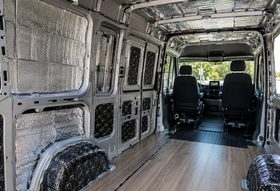
Car insulation can make a vehicle feel quieter and more comfortable, particularly in vans, classic cars and vehicles with large areas of exposed metal. Before buying materials, it helps to understand what you're trying to improve. Road noise, panel vibration, engine heat and condensation are different problems and rarely have the same solution.
A layered approach usually works better than covering every surface with one product.
What does car insulation do?
Vehicle insulation may reduce heat transfer, limit condensation, damp panel vibration or absorb reflected sound inside cavities. In a campervan conversion, it can also make the interior easier to heat and reduce the cold feeling from metal panels.
No treatment will make a moving vehicle silent. Tyres, airflow, suspension and the structure itself continue to generate and transmit noise.
Sound deadening, blocking and absorption
These terms are often used as though they mean the same thing, but they describe different functions.
Sound deadening
A constrained-layer damping sheet is bonded to a metal panel to reduce resonance. It adds controlled mass and converts some vibration into a small amount of heat. Full coverage isn't always necessary; treating the centre of a large resonant panel can be effective.
Sound blocking
A dense barrier limits airborne sound passing through an area. Barriers work best when continuous, with joints and penetrations sealed. They can be heavy, so vehicle payload and fixing must be considered.
Sound absorption
Open-cell acoustic materials reduce sound reflecting within a cavity or interior. They're useful behind suitable trim and in dry, protected areas, but they don't stop structure-borne road noise on their own.
Thermal insulation
Closed-cell foam traps air while resisting moisture. It can create a thermal break between interior trim and cold metal. The thickness available behind panels usually limits the final insulation value.
Common insulation materials
Closed-cell polyethylene foam is firm, lightweight and resistant to water, making it useful as a thermal break and lining material. Flexible elastomeric foam is another option for curved surfaces and condensation control.
Open-cell acoustic foam can absorb sound inside door cavities, wheel-arch boxes or interior panels, provided it remains dry and clear of moving mechanisms. Fibrous insulation is used in some conversions, but it must be installed so it can't slump, trap moisture or interfere with wiring.
For water-resistant sheet material, see eFoam's closed-cell polyethylene foam, and for fitting out a conversion, our guide to foam for campervans and motorhomes.
Where can insulation be fitted?
Typical areas include the floor, roof, doors, rear quarter panels, bulkhead and wheel arches. Each should be inspected before work begins.
Door treatments must not obstruct drains, window mechanisms, locks or side-impact equipment. Floor insulation must not affect seat mounts, pedals or safety-belt anchorages. Around the engine bay and exhaust, use only products specifically rated for the temperature and environment.
A sensible installation order
Start by removing trim carefully and recording the position of clips, wiring and fixings. Clean and degrease metal surfaces, then address rust or water leaks before covering anything.
Apply vibration damping to resonant panels where required. Add a suitable thermal or acoustic layer without compressing it excessively, and reinstate vapour control where the vehicle design requires it. Refit trim securely so it can't rattle.
Don't cover inspection points or permanently bury electrical connections that may need future access.
Condensation and ventilation
Insulation doesn't remove moisture from a vehicle. Cooking, breathing and wet clothing can release considerable water vapour in a campervan. Good ventilation remains essential.
A closed-cell lining can reduce warm, humid air reaching cold metal, but gaps and unsealed edges may still allow local condensation. Any existing drain paths must remain open.
Safety points to remember
Disconnect the battery where the vehicle manufacturer's procedure requires it, especially before working near airbags or electrical systems. Never place foam over airbag deployment areas, hot exhaust components or moving parts.
Check flammability, temperature range and adhesive compatibility. Products intended for domestic upholstery aren't automatically suitable for use next to vehicle heat sources. For industry background, see our overview of foam in the automotive industry.
Choosing the right car insulation foam
Define the main problem first. Use damping for panel resonance, mass for sound blocking, open-cell material for internal absorption and closed-cell material for moisture-resistant thermal breaks.
For bespoke pads and lining pieces, eFoam can provide foam cut to size and shape. Contact us with the location, thickness available and whether the area is exposed to moisture or heat.
Frequently asked questions
What is the difference between sound deadening and sound blocking?
Sound deadening uses a constrained-layer damping sheet bonded to a panel to reduce resonance and vibration. Sound blocking uses a dense, continuous barrier to limit airborne sound passing through an area. They solve different problems, and a layered approach usually works better than one product everywhere.
What foam is best for insulating a campervan?
Closed-cell polyethylene foam is firm, lightweight and water-resistant, making it a good thermal break and lining material. Flexible elastomeric foam suits curved surfaces and condensation control, while open-cell acoustic foam absorbs sound inside cavities provided it stays dry. Match the material to the specific problem rather than covering every surface with one product.
Does car insulation stop condensation?
Insulation doesn't remove moisture; cooking, breathing and wet clothing release considerable water vapour in a campervan, so good ventilation remains essential. A closed-cell lining can reduce warm, humid air reaching cold metal, but gaps and unsealed edges may still allow local condensation, and existing drain paths must stay open.
Can I use ordinary upholstery foam to insulate my car?
Not automatically. Products intended for domestic upholstery aren't necessarily suitable next to vehicle heat sources. Always check flammability, temperature range and adhesive compatibility, and never place foam over airbag deployment areas, hot exhaust components or moving parts.