





Foam for Floor Cushions
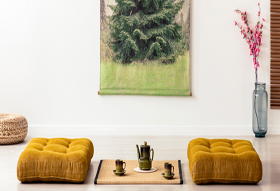
The UK has an enduring love of home furnishings, notably sofas and armchairs. But as more people look to declutter their living spaces, and many continue to live in small city apartments, demand is rising for floor cushions in place of bulkier furniture.
Why floor cushions?
Floor cushions are an excellent way to add extra seating for guests or create a more informal living space. Even in neat homes, they solve the "look but don't touch" feeling a visitor might have. Informal, portable and comfortable, they come at a range of price points – which also means they vary in quality.
Floor cushions for children
Some people use floor cushions for a soft seating space in children's playrooms. Soft and safe, the inner materials and outer fabrics can be tailored to children's tastes, and being portable, the cushions can move around the home – for instance beside a coffee table for colouring. The possibilities are endless, especially when you make your own. Our guide to playpen and soft-play foam has more for children's spaces.
Foam vs feather and fibre
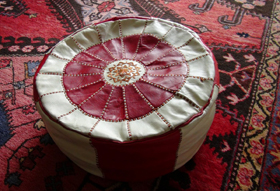
Common inner fillings include feather and fibre, but neither is best for keeping a cushion in a maintained, structured shape. Because they're so soft, floor cushions made with feather or fibre tend not to be as supportive, and well-stuffed feather cushions can be costly. A better alternative, and far easier to work with for a DIY cushion, is foam. With many grades, types and thicknesses to choose from, your cushion can be customised exactly: high-density polyurethane for a rigid, strong structure, medium and high-density Reflex foams for something softer, and medium-high density for children's cushions.
Choosing and ordering foam
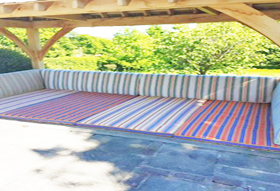
With eFoam it's easy to get a foam insert cut to your exact requirements. Use our online cut to size calculator and enter the width, depth and height of your shape, or contact one of our representatives for a custom shape. There are many suitable cover materials to consider – tufted corduroy, woven rush, crushed velvet and so on – and when measuring, allow an extra inch and a half on each dimension for the fabric to move when the foam is inserted, remembering that seams and zips take up a little fabric too. For outdoor floor seating, our guide to beach hut foam covers water-resistant options.
For expert advice on foam for floor cushions, please contact us.
Frequently asked questions
What foam is best for floor cushions?
For a rigid, strong structure we recommend high-density polyurethane foam; for a softer feel, medium and high-density Reflex foams are excellent. For children's cushions, medium-high density is the recommended option.
Is foam better than feather or fibre for floor cushions?
Yes, for keeping a structured shape. Feather and fibre fillings are soft but less supportive and tend not to hold their shape, whereas foam holds its form and can be customised by grade, type and thickness.
How much extra fabric do I need for a floor cushion?
Allow about an inch and a half extra on each dimension to account for the fabric moving when the foam is inserted, and remember that seams and zips will also take up a little fabric.