





Foam for Gymnastics
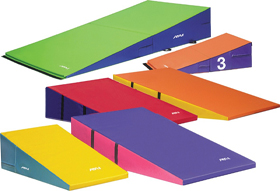
Gymnastics, tumbling and cheerleading involve many advanced skills, a number of which take years to master. Most athletes are guided by a qualified coach, but an increasing number now also incorporate training aids into their learning.
Use our FREE Gym Pit Foam Calculator to calculate quantities and get instant prices with free UK delivery.
Foam training aids
Training aids vary depending on the skill being developed and come in a huge range of shapes and sizes. Like crash mats and gym pits made from foam cubes, they're made of severe-high to high-density polyurethane foam – a density needed to support an athlete's full body weight if required. They're conventionally used to develop advanced skills, but are just as useful for learning and refining the basics.
Incline blocks
The most popular training aid is the incline block, found in a range of sizes but most commonly 1.5m to 2m long. Made in various inclines to suit different needs, these mats support the development of rolling skills, bridges, and training and conditioning. Suitable for all ages and sizes, they're popular for the fundamentals in gymnastics and cheerleading, including the cartwheel and the handstand to forward roll.
Homework blocks
For additional basic skills, single foam blocks around 1m by 0.75m and 15cm deep are used. Commonly known as homework blocks, these rectangles are often coated with a PVC fabric cover and marked with two small circles or template handprints. They're popular with gymnasts and cheerleaders learning handstands and cartwheels, with the hand marks a useful introduction to round-offs. The "homework" name comes from their popularity with young athletes who use them to continue basic training at home.
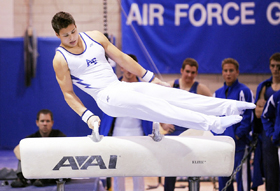
Octagonal tumblers
For techniques like front and back handsprings, octagonal tumbler foam blocks aid both the movement and support of an athlete. Unlike a smooth cylinder, which can let an athlete move too fast and risk injury with poor technique, the octagonal shape encourages athlete and block to move at a safe pace. The octagonal tumbler is the most universal training aid, helping to teach leaps, over-slips, backwards and forwards skills (including flips and handsprings) and walkovers.
Which foam for training aids?
Training aids are frequently made from very high-density polyurethane foams and rigid closed-cell polyethylene foams. EVA foam is another popular choice for its durability and resistance to indentation on impact. As aids come in so many shapes and sizes, many people fully personalise their own using eFoam's cut to size capabilities. If you're building a landing area, see our guide to foam for foam pits.
If you're looking for gym pit foam cubes or blocks, use our free gym pit foam calculator to work out exactly how many pieces you need with instant pricing. For bespoke training aids or specific foam requirements, please contact one of our friendly advisers for tailored advice.
Frequently asked questions
What foam is used for gymnastics training aids?
Training aids are usually made from severe-high to high-density polyurethane foam, which can support an athlete's full body weight. Rigid closed-cell polyethylene and EVA foam are also popular, the latter for its durability and resistance to indentation on impact.
What is an incline block used for?
The incline block, most commonly 1.5m to 2m long, supports athletes in developing rolling skills and bridges, and in training and conditioning. It suits all ages and helps with fundamentals such as the cartwheel and handstand to forward roll.
What is a homework block?
A homework block is a single foam block around 1m by 0.75m and 15cm deep, usually PVC-covered and marked with handprints. It helps gymnasts and cheerleaders learn handstands, cartwheels and round-offs, and is popular for basic training at home.