





Measuring and Installing Foam for Vlogging
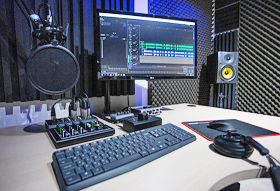
If you've read our guide on how acoustic foam can improve the sound quality and production values of your YouTube and podcast content, you may want to know how to measure your recording space to order your own. Acoustic foam reduces reverberation, sound reflections and flutter echoes, comes in a wide range of shapes and specifications, and can greatly improve your creative output.
Which acoustic foam shape?
First, decide which acoustic foam suits you. It's most commonly found in two shapes: flat chamfered or convoluted. Convoluted foam (also known as egg crate foam) offers a greater surface area, with its irregularities better absorbing sound waves from a range of angles. Though it looks bulkier, it's the best option for the highest-quality recording with little reverberation. Flat chamfered foam is just as effective and is the more subtle, minimal-looking choice. Either way, both come with self-adhesive backing, so you simply peel off the protective sheet and fix the panel to the wall. Our guide to installing acoustic foam covers fitting in detail.
Choosing thickness
Before measuring, think about thickness. We supply Pyrosorb-S Class 0 acoustic foam in 6, 12, 25 and 50mm. The most common, industry-standard thickness is 25mm, which can be attached to walls, ceilings, doors, floors and other features to control vibration, echoes and noise.
Measuring your space
For each wall, measure the wall-to-wall width and height, avoiding skirting boards. For additional areas such as a door, measure the width across and the height from floor to the top of the door. Then input your measurements into our online tool for a quote, or, if your space allows, use pre-cut acoustic foam sheets in 100cm x 100cm or 200cm x 200cm, lined up together to fit a room of equal measurements.
Bass traps for extra control
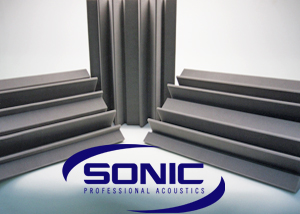
For superior sound quality, we recommend covering every feature in the space with acoustic foam. For extra soundproofing, also consider acoustic foam bass traps, designed to further control acoustics and reverberation. Their wedge shape allows easy placement in corners and greater flexibility in demanding spaces, and for even greater bass absorption they can be stacked to form a floor-to-ceiling wall cluster. Bass traps come in a range of styles and sizes, and we also provide a professional range of acoustic foam panels and bass trap kits for a more advanced solution.
For personalised guidance on purchasing acoustic foam for your recording space, please contact one of our expert advisers.
Frequently asked questions
What acoustic foam is best for vlogging or podcasting?
Convoluted (egg crate) foam offers a greater surface area, absorbing sound waves from many angles for the highest-quality, low-reverberation recording. Flat chamfered foam is just as effective and looks more subtle. Both have self-adhesive backing for easy fitting.
What thickness of acoustic foam do I need?
Pyrosorb-S Class 0 acoustic foam comes in 6, 12, 25 and 50mm. The most common, industry-standard thickness is 25mm, which can be fitted to walls, ceilings, doors and floors to control vibration, echoes and noise.
How do you measure a room for acoustic foam?
Measure each wall's wall-to-wall width and height, avoiding skirting boards, and measure doors separately. Input these into the online tool for a quote, or use pre-cut 100cm or 200cm square sheets lined up to fit.