





The Art of Shaping Foam: Techniques, Tools and Applications
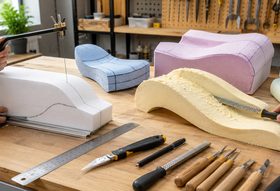
Foam is forgiving enough for a simple home project, yet precise enough to be converted into complex industrial components. The difference lies in choosing the right material, marking it accurately and using a cutting method suited to its density and cell structure.
Whether you're making a cushion or a protective case insert, good preparation produces a cleaner result and less waste.
Start with the right foam
Soft polyurethane foam is easy to compress and is commonly shaped for cushions, headboards and props. Dense reconstituted foam needs stronger cutting equipment, while closed-cell polyethylene and Plastazote produce crisp edges and are often used for packaging, seals and display work.
Polystyrene is shaped differently from flexible polyurethane. A tool that works well on one foam may tear, melt or create poor edges on another, so always identify the material first.
Measuring and marking
Measure twice before making the first cut. Use a firm tape measure, long straightedge and a marker that won't bleed onto a visible surface. For curves or unusual profiles, make a full-size paper or card template – see our guide to making a template for foam.
When replacing an existing cushion, measure the cover rather than copying foam that has already compressed or distorted. Allowances may be needed so the new foam fills the cover properly.
Hand-cutting techniques
A long, sharp knife can cut thin and medium-thickness foam. Use slow, shallow passes rather than forcing the blade through in one movement. An electric carving knife is useful for flexible upholstery foam because its two moving blades reduce dragging and tearing.
Keep the foam supported on a flat surface and cut away from your body. Replace blunt blades promptly; a dull knife is harder to control and produces rough edges.
Closed-cell sheets can often be cut with a sharp craft knife and straightedge. Several light passes are safer and neater than one heavy cut – our guide to cutting closed-cell foam has more detail.
Creating curves and bevels
Curves are easiest to produce from a clear template. Remove small amounts of material gradually, checking both sides to keep the profile even. Bevels can be marked with guide lines along the top and side faces before cutting.
For upholstery, minor irregularities can sometimes be softened with a polyester fibre wrap. However, fibre shouldn't be used to disguise major dimensional errors.
Professional shaping methods
Foam converters use vertical and horizontal band knives, profile cutters, CNC equipment and waterjet systems, depending on the material and required tolerance. CNC cutting is particularly useful for repeatable shapes, internal cut-outs and packaging inserts.
Convoluting machines split foam into an egg-crate profile, increasing surface area for mattress toppers, packaging and acoustic products.
Hot-wire cutting is generally associated with suitable polystyrene materials. It shouldn't be used indiscriminately on polyurethane or unknown foams, as heating polymers can create hazardous fumes.
Bonding foam pieces
Laminating allows different thicknesses or grades to be combined. Use an adhesive specifically intended for the foam and follow the manufacturer's ventilation, coverage and curing instructions. Test first, as some solvent-based products can attack particular plastics.
Apply an even coat and align the pieces carefully; once contact adhesive grips, repositioning may be difficult. Avoid saturating soft foam, which can create hard patches.
Finishing and covering
A stockinette undercover helps upholstery foam slide into a fabric cover and protects the surface. Polyester fibre wrap can add a softer crown and reduce visible edge lines.
For packaging, a clean cut and accurate fit are usually more important than decorative finishing. The cavity should restrain the item without placing damaging pressure on delicate controls or surfaces.
When to order foam cut to shape
Home cutting is suitable for straightforward pieces, but professional conversion is worthwhile for thick foam, repeated parts, complex curves or tight tolerances. It also reduces the risk of wasting a full sheet through one inaccurate cut.
With eFoam's foam cut-to-size and shape service, you can choose from standard profiles or provide details for an unusual shape. For guidance on the material itself, compare our foam grades before ordering.
Frequently asked questions
What is the best way to cut foam at home?
For thin and medium-thickness foam, use a long, sharp knife with slow, shallow passes rather than forcing it through in one movement. An electric carving knife suits flexible upholstery foam because its two moving blades reduce dragging and tearing, and a sharp craft knife with a straightedge works well for closed-cell sheets.
How do you cut foam without tearing it?
Keep the foam supported on a flat surface, use a sharp blade and make several light passes rather than one heavy cut. Replace blunt blades promptly – a dull knife is harder to control and produces rough edges – and use a full-size template for curves so you can remove small amounts gradually.
Can you hot-wire cut polyurethane foam?
No. Hot-wire cutting is generally associated with suitable polystyrene materials and shouldn't be used indiscriminately on polyurethane or unknown foams, because heating polymers can create hazardous fumes. Always identify the material first and use a mechanical method for flexible foams.
When should I order foam cut to shape professionally?
Home cutting suits straightforward pieces, but professional conversion is worthwhile for thick foam, repeated parts, complex curves or tight tolerances. It also reduces the risk of wasting a full sheet through one inaccurate cut, using equipment such as band knives, profile cutters, CNC and waterjet systems.