





What Is Foam Board and How Can It Be Used?
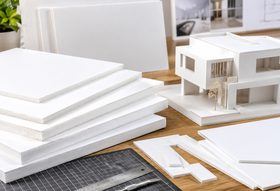
Foam board, also called foamcore, is a lightweight rigid sheet used for mounting, model-making, signs and presentation work. It normally consists of a polystyrene foam core faced on both sides with paper or thin card.
It shouldn't be confused with flexible upholstery foam, closed-cell polyethylene sheet or rigid building-insulation board. Those materials have different structures and uses.
What is foam board made from?
The core is usually expanded or extruded polystyrene, which keeps the sheet light and relatively stiff. Paper facings provide a smooth surface for printing, drawing and bonding photographs.
Standard boards are intended for dry indoor display. Specialist products may have plastic, aluminium or moisture-resistant facings for longer-lasting signs and exhibition work.
Common uses
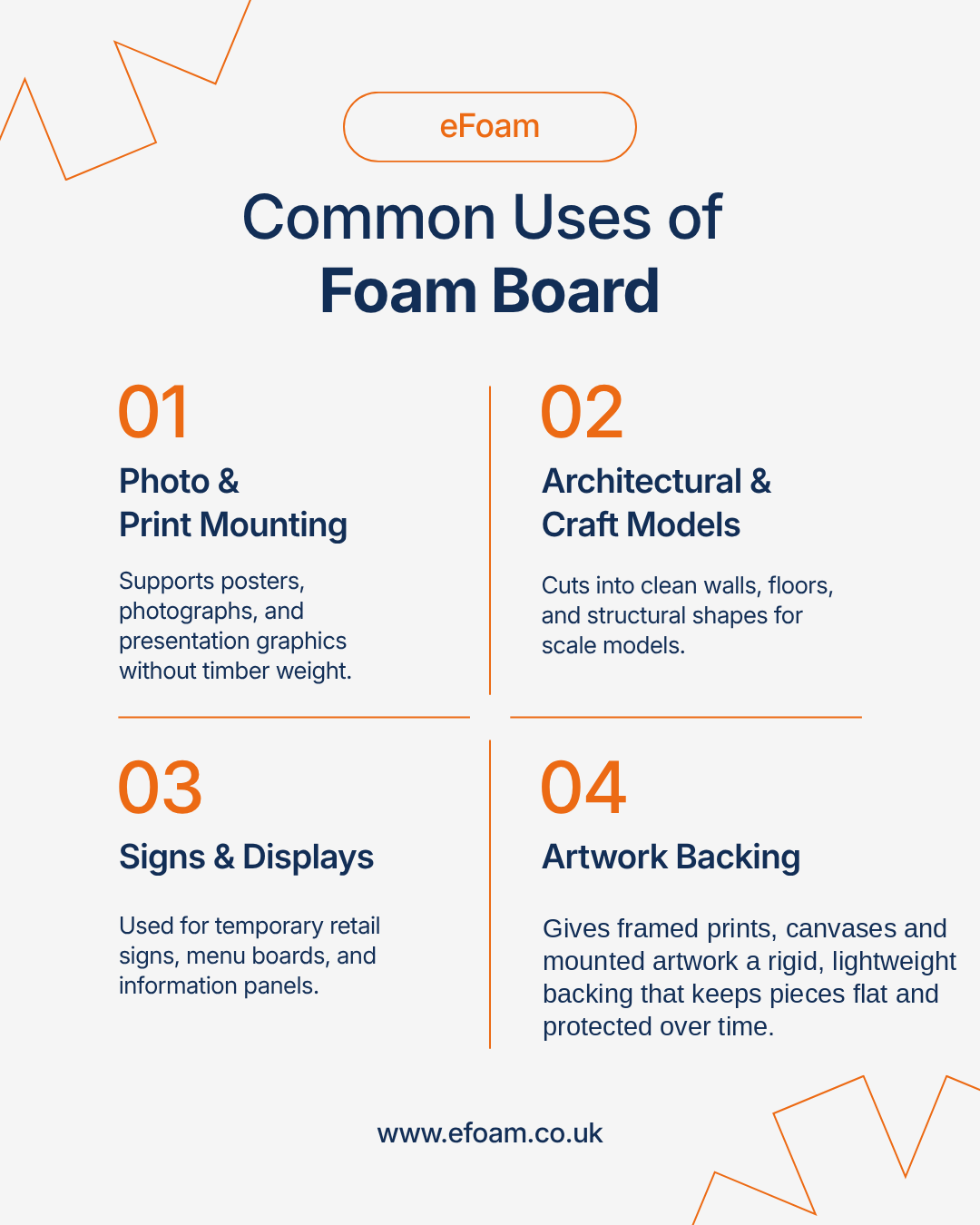
Photo and print mounting
Foam board supports posters, photographs and presentation graphics without the weight of timber sheet. Spray mount or double-sided film can create an even bond when compatible with the print and board.
Architectural and craft models
The board cuts into clean walls, floors and structural shapes for scale models. Several layers can be laminated to create thicker blocks.
Signs and displays
Retailers, schools and exhibitors use foam board for temporary signs, menu boards and information panels. It's easy to carry and can be fixed with light-duty display hardware.
Backing for artwork
The rigid surface keeps drawings and paper crafts flat. For valuable or archival work, use conservation-grade materials rather than ordinary acidic paper-faced board.
How to cut foam board
Use a fresh, sharp craft blade and a metal straightedge on a proper cutting mat. Make several light passes rather than pushing through the full thickness at once.
Keep the blade vertical for a square edge. Replace it as soon as the paper starts tearing or the foam drags. An adult should handle the knife in school and family craft projects.
For curves, make a card template and cut gradually. Very tight curves may expose the core or crush the facing. Our guide to foam for school projects has more craft-friendly tips.
How to join it
PVA adhesive works for many paper-faced boards but can introduce moisture and cause warping if applied heavily. Low-temperature hot-melt adhesive is sometimes used for models, although heat can damage the foam core.
Use pins, paper tape or corner braces to hold pieces while the adhesive sets. Test solvent-based sprays first, because some dissolve polystyrene.
Painting and finishing
Water-based paint is generally safer for standard foam board than solvent aerosols. Apply thin coats to both sides where possible to reduce warping.
Edges can be covered with paper tape, card strips or a frame. Laminated printed vinyl provides a durable display face but increases weight.
Limitations
Standard foam board dents easily, is combustible and isn't waterproof. It shouldn't be used as a structural panel, a permanent outdoor sign or a substitute for tested building insulation.
It can also bow under heat or high humidity. Store sheets flat, dry and away from radiators and direct sunlight.
Foam board versus foam sheet
Flexible foam sheets are used for upholstery, cushioning, packaging and acoustic treatment. Closed-cell polyethylene sheets are firmer, water-resistant and suited to pads, seals and case inserts.
Foam board is chosen for stiffness and a printable surface, not comfort or impact cushioning. For costume and prop work, our guide to cosplay foam explains which materials suit which job.
Choosing material for a project
Use foam board for lightweight displays and models. Choose upholstery foam for soft padding, packaging foam for product protection and closed-cell material for water-resistant or durable components.
For a project requiring a specific foam thickness or unusual shape, eFoam's cut-to-size service can supply appropriate flexible and closed-cell products. Identifying the required function first prevents similarly named materials being used in the wrong place.
Frequently asked questions
Is foam board the same as upholstery foam?
No. Foam board (foamcore) is a rigid polystyrene sheet faced with paper or card, chosen for stiffness and a printable surface. Upholstery foam is soft and flexible, used for padding and cushioning. They have completely different structures and uses and aren't interchangeable.
Can foam board be used outdoors?
Standard foam board isn't waterproof and shouldn't be used as a permanent outdoor sign. It dents easily, is combustible and can bow under heat or high humidity. Specialist boards with plastic, aluminium or moisture-resistant facings last longer for exhibition and signage work.
What's the best way to cut foam board cleanly?
Use a fresh, sharp craft blade and a metal straightedge on a proper cutting mat. Make several light passes rather than forcing through the full thickness, and keep the blade vertical for a square edge. Replace the blade as soon as the paper starts tearing or the foam drags.
Is foam board waterproof or fire-resistant?
Standard foam board is neither – it's not waterproof and it is combustible. Store it flat, dry and away from radiators and direct sunlight, and don't use it as a structural panel or a substitute for tested building insulation.