





Wine Cellar Insulation: A Practical Guide
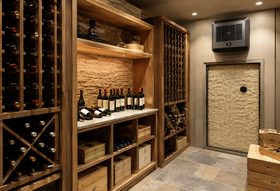
A wine cellar isn't simply a cool room. It's a controlled environment that needs stable temperature, sensible humidity and protection from external heat. If the enclosure is poorly insulated or allows warm, moist air to enter, the cooling system will work harder and condensation may form inside the walls.
Good construction begins with the room envelope, not the refrigeration unit.
Why wine cellar insulation matters
Wine benefits from a stable environment. Rapid temperature changes can be more troublesome than a small difference from an ideal target. Insulation slows heat entering from surrounding rooms and helps the cooling system maintain consistent conditions.
It also keeps the external face of the cellar construction warmer, reducing the chance of condensation in adjacent spaces.
Think of the cellar as a cold room
In a heated UK building, the wine cellar is normally colder than the spaces around it. Warm indoor air contains moisture and will try to move towards the cooler area.
The insulation, vapour-control layer and airtight layer must therefore be arranged to prevent warm, moist air reaching a surface where it can condense. The correct side and detailing depend on the construction, so professional design is advisable for a permanent conditioned cellar.
Insulation material options
Rigid PIR or phenolic boards provide high thermal resistance at relatively low thickness and are widely used in framed walls, ceilings and floors. Joints need to be tightly fitted and sealed as part of the chosen system.
Closed-cell spray polyurethane is used in some professionally designed cold rooms because it can combine insulation and air sealing. However, quality depends heavily on substrate condition, application and thickness, and it can make future inspection difficult.
Closed-cell polyethylene and elastomeric foams are useful for pipework, thermal breaks, seals and local details. They aren't normally the sole wall insulation for a full cellar, but they can solve gaps and condensation-prone junctions when properly specified. See also our guide to pipe insulation foam.
Walls, ceiling and floor
All six sides of the cooled enclosure matter. A highly insulated wall won't compensate for an uninsulated ceiling below a warm bedroom or a floor above a garage.
Continuity is crucial at corners and where partitions meet the floor or ceiling. Timber or metal studs can create thermal bridges, so the design may include a continuous insulation layer across the framing.
The floor finish must tolerate the expected humidity and any accidental water. In some locations, insulation beneath the floor is required to prevent heat gain and surface condensation.
The cellar door
An ordinary internal door is often the weakest part of the enclosure. Use an insulated, well-fitting door with continuous perimeter seals and an effective threshold or drop seal.
Glazed doors need insulated glazing suited to the temperature difference. Large glass areas increase the cooling load and should be considered when sizing the system.
Sealing penetrations
Lighting cables, pipework, ducts and controls all pass through the envelope. Each penetration should be sealed without compromising fire safety or future maintenance.
Avoid recessed lights that create large openings into an uncontrolled ceiling void unless the design specifically accommodates them. Low-heat lighting reduces internal heat gain.
Cooling equipment and drainage
The cooling unit must be selected for the room volume, insulation level, glass area and surrounding temperature. Oversizing can lead to short cycling, while undersizing may prevent the cellar reaching stable conditions.
Condensate needs a reliable drainage route. Insulate cold pipes with a closed-cell product and seal joints to prevent dripping.
Common mistakes
Frequent problems include leaving one wall uninsulated, placing the vapour-control layer on the wrong side, using a hollow door, failing to seal around ducts and relying on decorative wall finishes as insulation.
Another mistake is building the room first and asking a refrigeration contractor to "make it work" afterwards. The cooling load should inform the construction from the start. For general principles, see our guide to insulating your home.
Using foam in cellar details
Bespoke closed-cell strips can seal around frames, isolate brackets and fill controlled gaps. eFoam's closed-cell polyethylene foam can be cut to the required dimensions for suitable non-structural details.
For a complete cellar, consult a cold-room or wine-cellar specialist who can coordinate insulation, vapour control and refrigeration. For individual foam components, contact eFoam with the temperature, moisture exposure and measurements.
Frequently asked questions
How do you insulate a wine cellar?
Treat the cellar as a cold room and insulate all six sides of the cooled enclosure, with continuity at corners and junctions. Combine a high-performance insulation layer with a correctly positioned vapour-control layer and an airtight layer, an insulated well-sealed door, and sealed penetrations. The cooling load should inform the construction from the start.
What is the best insulation for a wine cellar?
Rigid PIR or phenolic boards give high thermal resistance at low thickness and are widely used in framed walls, ceilings and floors. Closed-cell spray polyurethane combines insulation and air sealing in some professional cold rooms. Closed-cell polyethylene and elastomeric foams are ideal for pipework, thermal breaks, seals and condensation-prone junctions rather than as the sole wall insulation.
Why does condensation form in a wine cellar?
The cellar is usually colder than the rooms around it, so warm indoor air carrying moisture moves towards the cooler area. If the vapour-control and airtight layers are on the wrong side or are discontinuous, that moist air reaches a cold surface and condenses inside the construction. Correct detailing prevents it.
Does a wine cellar need an insulated door?
Yes. An ordinary internal door is often the weakest part of the enclosure. Use an insulated, well-fitting door with continuous perimeter seals and an effective threshold or drop seal. Glazed doors need insulated glazing, and large glass areas increase the cooling load.