





A Guide to Car Seat Foam

What type of foam is used in car seats?
Regardless of make or model, most car manufacturers use polyurethane foam in their seats. The primary automotive upholstery foam of choice, polyurethane is highly supportive, durable, comfortable and protective, making it ideal for transport. Severe (very high density) and high-density polyurethane support both driver and passengers on long and short journeys. In some instances, manufacturers opt for PUR polyester and PUR polyether, a durable, flexible plastic.
How to make a car seat more comfortable
Given the safety specifications a car interior must meet, including its seats, there isn't much you can reasonably modify without compromising safety, and serious changes can have legal implications. It's best to work with what you have: adjust the seat height and backrest incline to improve your driving position, and set the headrest at ear level behind your head for support and better posture.
Two temporary changes can better support your lumbar region. Most cars have built-in lumbar support, so you may only need to adjust the backrest tilt. If not, lumbar cushions made from high-density foam are available – or a rolled-up towel can work just as well.
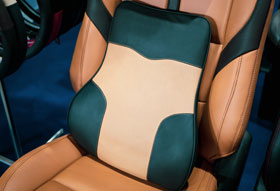
Sitting for long periods can also place pressure on the spinal discs. A good way to ease this is an angled, high-density foam car seat cushion. Angled inwards at roughly 45 degrees, it removes pressure from the spinal discs by improving postural alignment. A wedge cushion works on the same principle, with 8-degree and 11-degree options to suit flat or bucket seats.
How to add padding to a car seat
To add padding, the easiest option is a foam cushion pad that slips onto the seat base or sits against the backrest. These can be bought online, or easily made with custom cut to size foam, a cover fabric and some straps to attach it to the seat.
How to replace car seat foam
If you're replacing the foam in your car seats, it's best to consult a foam manufacturer who can advise on the specifics. Many are aware of the foam types and shapes used by various car brands and can help determine the components you need for each cushion.
Online tutorials can guide you through replacing automotive upholstery foam yourself – typically detaching the seat, removing the upholstery and fitting the new foam. However, for obvious safety reasons it's crucial that your car seats are firmly refitted, so it's best to have your local garage or dealership help with that. For long-haul driving comfort, see our guide to foam for lorries.
To discuss a custom car seat cushion or replacement foam, please contact our friendly team.
Frequently asked questions
What type of foam is used in car seats?
Most car manufacturers use polyurethane foam, which is highly supportive, durable and comfortable. Severe (very high density) and high-density polyurethane support the driver and passengers. Some manufacturers also use PUR polyester and PUR polyether.
How can I make a car seat more comfortable?
Adjust the seat height, the backrest tilt and the headrest (to ear level) for better posture. A high-density foam lumbar cushion helps if your seat lacks built-in support, and an angled high-density foam seat cushion can ease pressure on the spinal discs.
Can I replace car seat foam myself?
It's best to consult a foam manufacturer, who can advise on the foam types and shapes used by various car brands. For safety, car seats must be firmly refitted, so it's wise to have your local garage or dealership help with that step.