





Orthopaedic Mattresses: Types, Benefits, Uses and Limitations
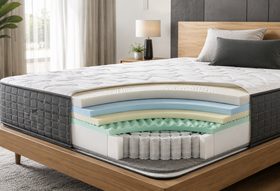
The term "orthopaedic mattress" suggests a product designed to support the joints, back and wider musculoskeletal system. In practice, it's a marketing description rather than one single regulated mattress construction.
A mattress may be firm, pressure-relieving or zoned and still feel completely wrong for a particular sleeper. Comfort depends on body shape, sleeping position, health, base and personal preference.
What is an orthopaedic mattress?
Most products sold under this name aim to provide stable support and prevent excessive sinking. They may use firm springs, high-resilience foam, latex, memory foam or a hybrid of several materials.
The label doesn't prove that a mattress will treat back pain or another condition. Look at the actual construction, trial terms and technical information.
Common types
Firm foam mattresses
High-resilience polyurethane foam provides even support without metal springs. Different layers can create a firmer base and softer comfort surface.
Memory foam mattresses
Memory foam conforms around the body and redistributes pressure. It's normally bonded over a supportive foam base. A full-depth soft memory foam mattress may allow too much sinking for some users.
Pocket-sprung mattresses
Individual springs respond separately and can provide strong edge support. Comfort layers above the springs determine much of the final feel.
Hybrid mattresses
Hybrid designs combine springs with foam, latex or memory foam. They aim to balance bounce, support and contouring.
Zoned mattresses
Different areas are made firmer or softer to support the shoulders, waist and hips. Zoning must suit the sleeper's height and position; a poorly aligned zone can be less comfortable than a uniform surface.
Possible benefits
A supportive mattress can help keep the body in a comfortable position and reduce pressure where the sleeper contacts the surface. Couples may benefit from reduced movement transfer in foam or pocket-sprung designs.
People with back pain often have different preferences. Some find a firm surface comfortable, while others need more pressure relief. NHS advice on back pain focuses on remaining active and seeking assessment where pain is severe or persistent, rather than relying on a particular mattress as a cure.
Potential drawbacks
Very firm mattresses can create pressure at the shoulders and hips, especially for side sleepers. Thick memory foam may feel warm or make movement more difficult for people with limited mobility.
A mattress that's too soft may allow the pelvis to sink and can make turning harder. New products may also feel different during the first few nights as the materials and sleeper adjust.
Who might consider a firmer supportive mattress?
A firmer design may suit front or back sleepers, heavier users and people who dislike a deep sinking sensation. Side sleepers often prefer enough surface cushioning for the shoulders and hips.
Anyone with a diagnosed condition, pressure-ulcer risk or significant mobility problem should seek advice from a healthcare or occupational-therapy professional. Domestic "orthopaedic" branding isn't a substitute for a clinical pressure-care product.
How to choose
Try the mattress in your normal sleeping position and consider how easily you can turn and get out of bed. Check whether the base is compatible; a weak or widely spaced base can change the feel and damage the mattress.
Look at firmness, layer thickness, density, cover, ventilation and return policy. Don't judge only by the word orthopaedic or by an arbitrary "extra firm" label. Our guides to sprung vs foam mattresses and the complete guide to foam mattresses cut to size may help you compare.
Foam mattresses cut to size
Boats, caravans, daybeds and unusual frames may need a mattress made to specific dimensions. A supportive polyurethane base can be combined with a memory-foam top layer to create a balanced construction.
eFoam supplies foam mattresses and toppers in standard and custom sizes. For irregular profiles, the foam cut-to-shape service includes boat mattresses and bespoke options.
Final point
The best mattress is one that feels supportive, allows comfortable movement and suits the sleeper's needs. No mattress should be promised as a treatment for pain. Seek medical advice for persistent symptoms, weakness, numbness or pain following injury.
Frequently asked questions
Is "orthopaedic" a regulated mattress standard?
No. "Orthopaedic mattress" is a marketing description rather than a single regulated construction. The label doesn't prove a mattress will treat back pain or any condition, so look at the actual construction, materials, trial terms and technical information instead.
Does an orthopaedic mattress treat back pain?
A supportive mattress can help keep the body in a comfortable position and reduce contact pressure, but no mattress should be promised as a cure. NHS advice on back pain focuses on staying active and seeking assessment where pain is severe or persistent, rather than relying on a particular mattress.
Are firmer mattresses better for your back?
Not automatically. Some people with back pain find a firm surface comfortable, while others need more pressure relief. Very firm mattresses can create pressure at the shoulders and hips, especially for side sleepers, while a mattress that's too soft may let the pelvis sink and make turning harder.
What mattress suits side sleepers?
Side sleepers usually prefer enough surface cushioning for the shoulders and hips, whereas firmer designs tend to suit front or back sleepers, heavier users and those who dislike a deep sinking sensation. Try the mattress in your normal sleeping position before deciding.